Forsyth County Weekly Pay Climbs to $1,509 as Leaders Focus on Training, Expansion and Ready Sites
Forsyth County's average weekly wage rose 3.7% in early 2026 to nearly match the state figure, while job growth stayed modest and local leaders pointed to workforce training and development sites as priorities.
By Ivan Petrov ·
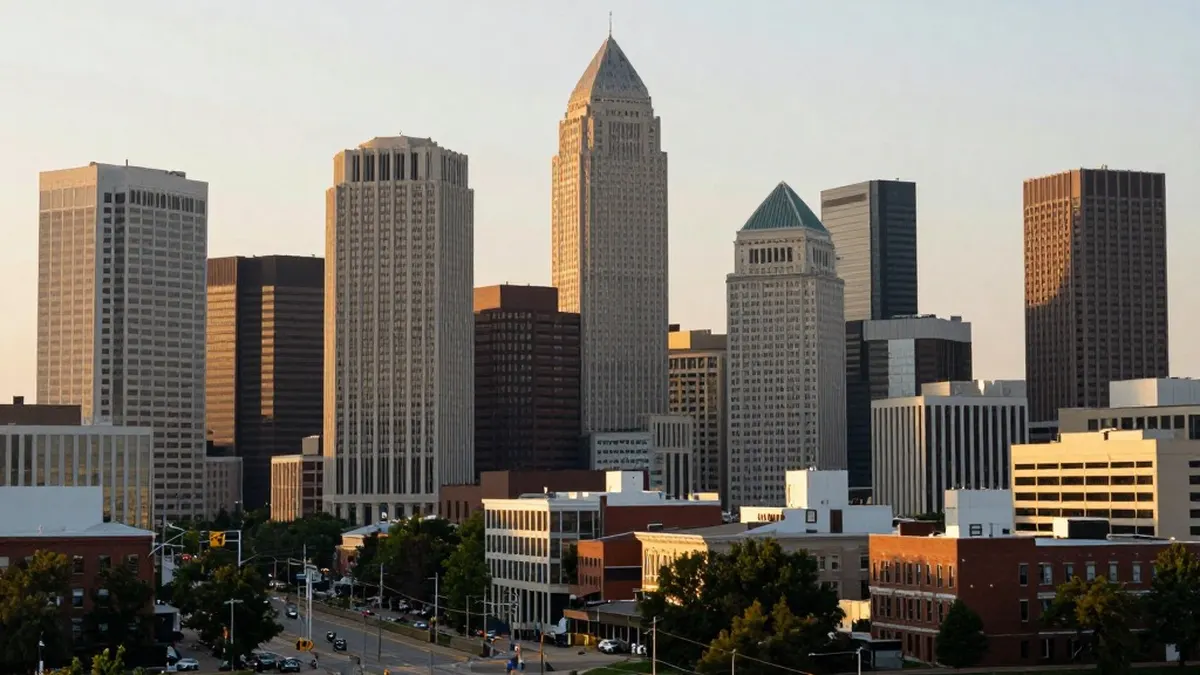
Forsyth County's average weekly wage reached $1,509 in the first quarter of 2026, putting it just below North Carolina's average even as growth in the number of covered jobs remained slight, according to a preliminary Bureau of Labor Statistics report.
The county's wage was up 3.7% from a year earlier, outpacing the 3.3% increase statewide but trailing the 3.9% national rise. The state average stood at $1,515 per week, and the national figure was $1,654. Forsyth counted 190,054 covered jobs in March, a 0.2% gain from March 2025, compared with a 0.8% increase across the state.
Neighboring Davidson County recorded an average weekly wage of $1,064, which is $445 lower than Forsyth's, across 46,957 covered jobs. The federal release does not give the same annual growth comparisons for Davidson that it provides for larger counties.
Mark Owens, president and CEO of Greater Winston-Salem, Inc., said the organization is pursuing growth tied to jobs that can support families. "We are working to ensure that Forsyth County grows at a steady pace while focusing on recruiting and retaining high-quality jobs that pay family sustaining wages," he said by email. He described rising average pay alongside modest job growth as consistent with that strategy and named advanced manufacturing and health care as fields that need skilled workers.
Data the organization supplied from labor-market provider Lightcast show health care and social assistance added 4,652 jobs, or 12%, between 2019 and 2025. Construction grew by 1,789 jobs, or 26%, and manufacturing by 722 jobs, or 4%. Average annual earnings per job in 2025 were $90,768 in health care and social assistance, $89,000 in construction and $99,109 in manufacturing, against a countywide figure of $83,238. Those annual numbers are a different measure from the federal weekly wage data.
Owens cited Winston-Salem/Forsyth County Schools, Forsyth Technical Community College, apprenticeships, employer training and higher education institutions as routes into those careers. Greater Winston-Salem, Inc. said more than 400 students in the school system have earned Career-Ready Credentials through its ASPIRE program. It also reported that since 2020, Forsyth has attracted $839 million in capital investment and 4,400 new jobs through incentivized projects, about three-quarters of them in advanced manufacturing.
Mayor Allen Joines said the city works with the organization to track employment and support business growth, emphasizing existing businesses and startups and efforts to remove regulatory obstacles to expansion. The city aims for 50 business startups a year and recorded 75 last year, he said.
Asked about opportunity in East Winston and other historically underserved areas, Joines pointed to infrastructure work along the Liberty Street corridor, a business park near Smith Reynolds Airport and the city's small-business loan program. More than 60% of that program's borrowers are minority- or women-owned businesses, he said. He called the supply of "ready to go" development sites the main gap the city must address. Finishing the eastern leg of the Northern Beltway should open more sites, he said, though some will need sewer lift stations to move wastewater across ridgelines. Work has started on one in the southeastern part of the city, but Joines gave no completion date or job estimate.
The federal figures count jobs by where they are located, not where workers live, and they include both full- and part-time positions. Bonuses and shifts in the mix of higher- and lower-paying jobs can affect the average, which is neither a median nor a measure of take-home pay. A higher county average does not show that every worker received a raise, or whether lower-paid workers and residents of every neighborhood saw meaningful gains. For people weighing training or a new job, pay, hours, benefits and transportation costs will shape what an opportunity is worth.
Source: The Winston-Salem Chronicle