BBC Retains Cloudy Ocean Footage to Defend Authenticity Against AI
Blue Planet III producers intentionally preserved murky water and background clutter to distinguish real deep-sea biology from synthetic imagery, a tactic they plan to expand as artificial intelligence advances.
By Karim Graham ·
Zero frames of generative artificial intelligence appear in the final cut of Blue Planet III, a declaration made by the BBC to counter rising skepticism about digital fabrication in media.
The new three-part series, which premieres on 1 November on BBC1 and iPlayer, marks a deliberate shift in visual strategy for the broadcaster. Producers chose to retain cloudier, less polished shots rather than removing particulate matter or background objects. This approach aims to preserve the organic texture of the ocean, a visual cue that helps audiences distinguish real footage from AI-generated simulations.
Executive producer Elizabeth White explained that the team is leaning into this authenticity because AI makes viewers more suspicious of perfect imagery. She stated that the animals filmed in the deep ocean are probably more remarkable than AI could imagine and that the footage is completely real. White noted that in previous series, sequences with high plankton counts or poor water visibility might have been discarded. Now, those details remain in the final edit.
Jack Bootle, the BBC's head of specialist factual commissioning, reinforced this stance during a press screening. He assured journalists that not a single frame of the series was created with generative AI. He described the current moment as a golden age of natural history-making, claiming the new episodes are bursting with novel behavior that contrasts with the familiar imagery audiences may have seen before.
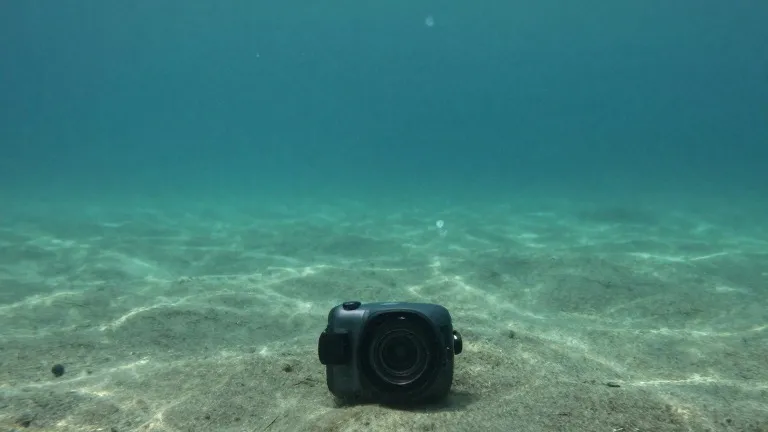
The production relied on new technology to capture these scenes. Yoland Bosiger, the series producer and director, developed an underwater CCTV camera nicknamed the stonefish. This device recorded dolphins using sea sponges to block holes in coral and trap fish. Other new footage includes a grouper communicating with a different fish species, 200,000 crabs lining up in formation to feed, and sea urchins using shells as sun hats.
Filming took four years across five oceans. The crew built a mini-dome camera to follow an octopus and used a deep-sea selfie stick. Camera operators wore leg-mounted scooters to capture immersive diving footage, and lasers were deployed to illuminate deep-sea animals. These tools allowed the team to document resilience and threats, including how warmer seas are killing the sea anemones where clownfish live.
David Attenborough, who is 100, narrates the series. Bosiger said Attenborough was very much involved in the process and made changes to the scripts. White added that Attenborough has not lost his curiosity and remains excited when shown new footage. The series also continues the plastics theme from Blue Planet II with stories on pollutants and forever chemicals.
The production utilized more local crews on location than earlier series, a method White said helped save money. She declined to comment on how the BBC's £500m cost-cutting drive might affect the unit's reputation, but she emphasized the financial efficiency of the new shooting strategy.
Source: The Guardian
More Culture · World news · Report a business · Got a Story?