Former inmates describe four years of abuse for freed 74-year-old American
Two Ukrainians claim a retired teacher endured systematic violence and neglect in a Russian facility before his release in St Petersburg.
By Karim Graham ·
For ordinary observers, the release of a high-profile detainee often marks the end of a diplomatic saga. However, the recent freedom of Stephen Hubbard, a 74-year-old American teacher, has cast a harsher light on the daily realities faced by Western prisoners held in Russia. According to two former cellmates, Hubbard did not merely survive his captivity, but endured a prolonged period of physical and psychological mistreatment that left him physically broken.
Khyliuk, a journalist, and Ihor Shyshko, a former soldier, spent several years in the same facilities as Hubbard. Khyliuk first crossed paths with Hubbard in September 2022 at the Novozybkov prison in the Bryansk region, a location situated near the Ukrainian border. Khyliuk noted that Russian guards immediately targeted Hubbard because of his nationality. He recalled inspections where officers would search for the American, using insulting language and issuing threats from the very beginning of his detention.
Shyshko, who arrived at the same facility, confirmed that Hubbard’s status drew unwanted attention from prison staff. The American was reportedly forced to memorize Russian phrases, sing the national anthem, and recite prison rules that he could not read. Shyshko witnessed guards striking Hubbard on his legs, back, and arms. He also reported that Hubbard was subjected to electric shocks via a stun gun, denied adequate food and medical attention, and kept in freezing temperatures. Shyshko further alleged that Hubbard was sexually humiliated in front of staff.
Hubbard was originally captured in April 2022 in Izyum, a city in eastern Ukraine where he lived with his partner. Russian authorities accused him of serving in the Ukrainian military, a charge that led to a conviction in Moscow and a sentence of nearly seven years. The accounts from Khyliuk and Shyshko provide corroboration for claims made by Hubbard’s family regarding the extent of his suffering.
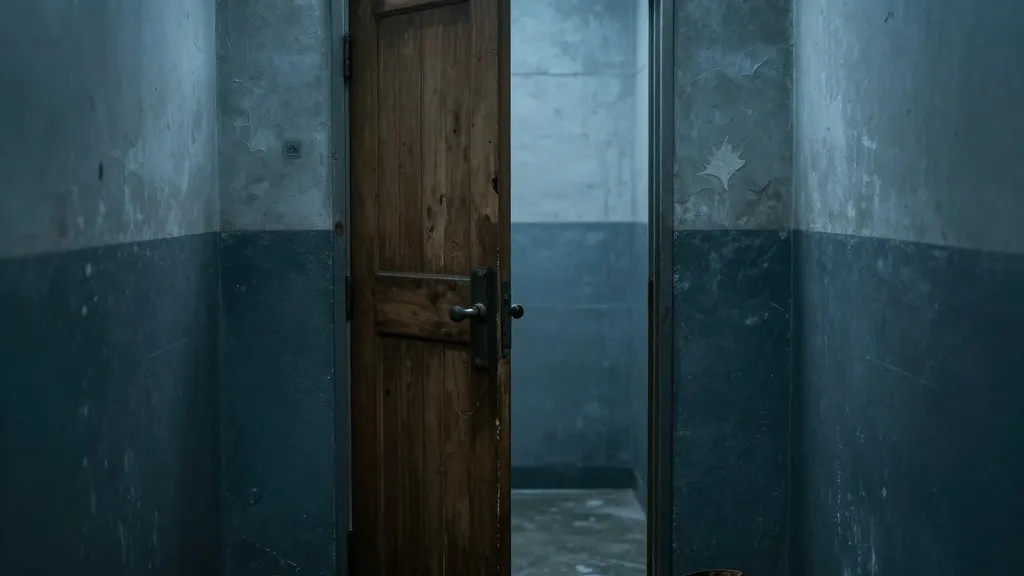
During their time in adjacent cells, Khyliuk observed a steady decline in Hubbard’s health. He heard frequent complaints and noted that guards called the prison doctor with increasing regularity. Khyliuk described the prison environment as having shattered windows and intense cold, forcing detainees to seek warmth in the bathrooms during their limited exercise time. He stated that conditions at Novozybkov were harsher than in other nearby facilities.
Hubbard was later transferred to Pakino, where Shyshko said his condition deteriorated significantly. Shyshko described Hubbard’s knees and feet as rotting and recalled bandaging him personally after the prison doctor refused to treat him. Hubbard was described as frail and barely mobile. The daily routine at Pakino included a diet of porridge, bread, and potatoes, alongside forced running, stress positions, and beatings. Shyshko also mentioned an incident where a handler set a dog on prisoners.
Khyliuk claimed that Hubbard was hidden from International Red Cross inspectors shortly after the transfer to Pakino to conceal his state. The Red Cross stated that it seeks to assess the conditions of every individual it is granted access to and continues discussions with conflict parties on the matter. Khyliuk noted that Hubbard disappeared from the prison in 2024, leading him to believe the man had been released.
The Kremlin released Hubbard on the same day that US special envoy Steve Witkoff met with President Vladimir Putin in St Petersburg. Witkoff referred to the Russian leader as a humanitarian, while President Donald Trump said he had requested Hubbard’s freedom in a previous phone call. Khyliuk, who returned to Ukraine in August 2025 through a prisoner exchange, welcomed Hubbard’s release but criticized the timing as a political move. Shyshko expressed hope that those responsible for the mistreatment would eventually face justice, stating that evil must be punished.
Khyliuk compared the overall experience of Russian captivity to the Stalin era, describing it as a torture machine. Despite the political context of the release, the two former cellmates emphasized the personal toll of the detention. Hubbard’s freedom now shifts the focus to the broader question of accountability for the years he spent behind bars.
Source: BBC News