Serbia chooses between Vučić and student list in tight race
A snap parliamentary vote pits the long-serving president against a non-hierarchical group formed after a fatal canopy collapse in Novi Sad.
By Karim Graham ·
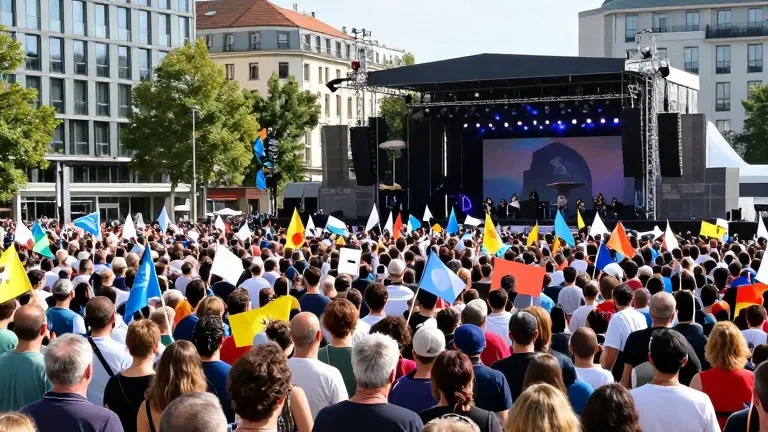
Serbians went to the polls on Sunday to decide the future of their government, with analysts predicting a narrow margin of victory. The contest marks a historic break from the norm, pitting the country’s dominant political figure against a decentralized student movement that has emerged from nearly two years of protests.
Reliable polling data is scarce, but the election results will determine whether Aleksandar Vučić continues his rule or if power shifts to a new generation of candidates. The race follows a snap election called last month, in which Vučić stepped down as president to seek the premiership. He has served in various executive roles since 2012, pointing to a decade of economic expansion and infrastructure projects as evidence of his stewardship.
The opposition list originated from the deaths of 16 people when a canopy fell at a railway station in Novi Sad. University faculties selected 250 candidates from among academics, athletes, and engineers, none of whom had prior political experience. Ilija Srdanović, a cardiologist at Novi Sad University, sits at the top of the list. He arrived for a media interview on a motorbike, wearing a high-visibility jacket with pro-student slogans. He stated that it was normal to support his students in their struggle.
The student bloc operates without a formal hierarchy or single leader. Srdanović is the first name on the ballot but is not necessarily the designated choice for prime minister. Aleksandra, a student at Novi Sad University who provided only her first name, described the group’s composition as a strength. She noted that they had assembled individuals who were top performers in their respective fields.
Vučić maintains a strong base of support among voters who view him as a protector of national interests. He has characterized the student movement as foreign-backed, claiming it aims to weaken the state. In contrast, the Student List argues that Vučić’s Serbian Progressive Party controls state institutions and media. An international election observation mission cited an overwhelming advantage for the ruling party in the 2023 vote, attributing it to media bias and the misuse of public resources.
The Novi Sad disaster remains the central issue for many voters. The renovation of the station was part of the Belgrade to Budapest high-speed rail line, a flagship project of Vučić’s administration. Magda Anastasijevic, an Eastern Europe analyst at ACLED, observed that Vučić had previously survived crises by identifying scapegoats, but the canopy incident offered no clear target for blame.
Foreign policy positions have also shaped the final days of campaigning. Serbia is engaged in EU accession talks while maintaining close ties with Russia and China, both of which do not recognize Kosovo’s independence. Vučić warned that these relationships could be severed under a student-led government. On Saturday, 150,000 people gathered in Slavija Square to hear from student candidates, while the ruling party held a solo rally for Vučić at the Belgrade Arena.
Source: BBC News