Trump-Backed Armenia Corridor Becomes Target of Antisemitic Conspiracy Claims
As Armenia ratifies a US-championed transport route linking Azerbaijan to its Nakhchivan exclave, pro-Russian figures and opposition voices are framing the project as serving hidden Jewish and Israeli interests.
By Marco Vargas ·
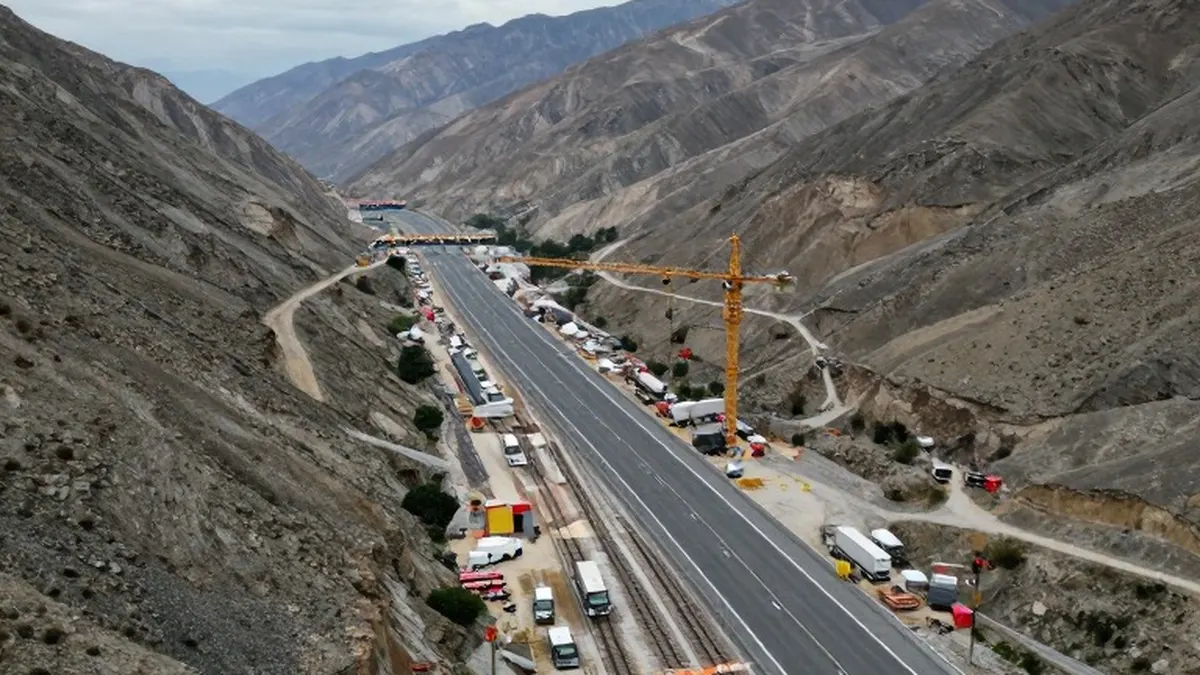
As Armenia and Azerbaijan press ahead with a US-backed transport corridor championed by President Donald Trump, pro-Russian political figures and Armenian opposition commentators are portraying the project as a vehicle for hidden Jewish and Israeli interests, reviving antisemitic conspiracy narratives at a moment of deepening strain between Yerevan and Moscow.
The claims have gained traction since Armenia's parliament ratified the Trump Route for International Peace and Prosperity, known as TRIPP, on October 28 by 63 votes to 32, with opposition lawmakers voting against. The project would connect mainland Azerbaijan with its Nakhchivan exclave across southern Armenia, near the Iranian border. On Thursday, the Armenian government proposed an extraordinary parliamentary session for November 12 to consider legislation enabling the joint Armenian-American company that will implement the project.
While critics have raised legitimate questions about sovereignty, relations with Iran and dependence on Washington, several prominent voices have gone further. Khosrov Harutyunyan, Armenia's prime minister from 1992 to 1993, told Armenian outlet 168TV that TRIPP was a "Jewish project." He alleged that Israel proposed renaming the Zangezur Corridor to sidestep Armenian objections, and argued the real aim was to bring the southern Syunik province under foreign economic, and eventually military, influence.
Political analyst Arthur Khachikyan advanced similar claims, asserting in an October 30 statement published by 168.am that the company's owners belonged to the Israeli lobby, and telling Goris Times on November 4 that the initiative was linked to Trump's son-in-law Jared Kushner. He suggested control over the strategic Meghri area would ultimately pass to interests tied to Israel and Azerbaijan.
The published agreement does not support those assertions. It provides for a 74% American stake and a 26% Armenian stake in a development company incorporated in Armenia, with the American shareholder wholly owned by the US International Development Finance Corporation, a government agency. The deal grants the company broad commercial powers but explicitly recognizes Armenian sovereignty and jurisdiction over the project area, and nothing in it establishes control by Israel, Kushner or any lobby.
Other commentators have pushed still broader claims. Analyst Vigen Hakobyan told 168TV that Azerbaijan owed Israel obligations beyond military cooperation, while commentator Andranik Hovhannisyan, on opposition outlet LIVEnews.am, compared Armenia's position to that of Palestinians under Israel. Political commentator Tiran Lokmagozian told Lratvakan Radio that Israel received control over Karabakh as payment for arming Azerbaijan in the 2020 war, and that Israeli forces operated there with airports built for strikes on Iran. No credible evidence supports those claims, and his assertion that Azerbaijanis were not being resettled conflicts with reports of returning residents. Tigran Kocharyan, editor-in-chief of Alpha News, claimed Israeli-backed operations against Iran were being prepared from Azerbaijani territory, and joined an October 30 Moscow roundtable criticizing Prime Minister Nikol Pashinyan's Russia policy.
The real defense relationship between Israel and Azerbaijan has fed the accusations. On October 19, Horizon Weekly, a Canadian publication tied to the Armenian Revolutionary Federation, reported a $235 million arms deal between Israeli firm Elbit Systems and Azerbaijan. Elbit confirmed the contract without naming the customer. Criticism of that established arms trade, however, is distinct from claims of secret Jewish control over regional developments.
The wider confrontation with Moscow is escalating. At the October 30 meeting, Russian State Duma member Konstantin Zatulin and political scientist Andranik Migranyan warned that Armenia's statehood was at risk if it broke with Russia. On November 4, Russia proposed restricting Armenia's voting and appointment rights in the Collective Security Treaty Organization over unpaid contributions. Armenia froze its participation in the alliance in 2024, and on Thursday Pashinyan reiterated that his country's interests in the organization had been exhausted.
US State Department religious freedom reports for 2022 and 2023 documented antisemitic theories circulating among fringe groups and Russia-affiliated bloggers in Armenia, including claims that the loss of Karabakh was part of a global Jewish-Turkish conspiracy, as well as attacks on a Yerevan synagogue that community representatives attributed to outside provocations. There is no public evidence Moscow directed the statements about TRIPP, but the recurring references to Jewish projects and powerful lobbies echo those documented narratives. Introducing allegations of hidden Jewish control into Armenia's debate over its future risks replacing scrutiny of political decisions with scapegoating, and exposing the country's small Jewish minority to hostility.
Source: The Jerusalem Post