World Court Set to Deliver Landmark Ruling in Rohingya Genocide Case Against Myanmar
The International Court of Justice will announce on 19 November whether Myanmar committed genocide against the Rohingya, a judgment with sweeping implications for other genocide cases worldwide.
By Stefan Greco ·
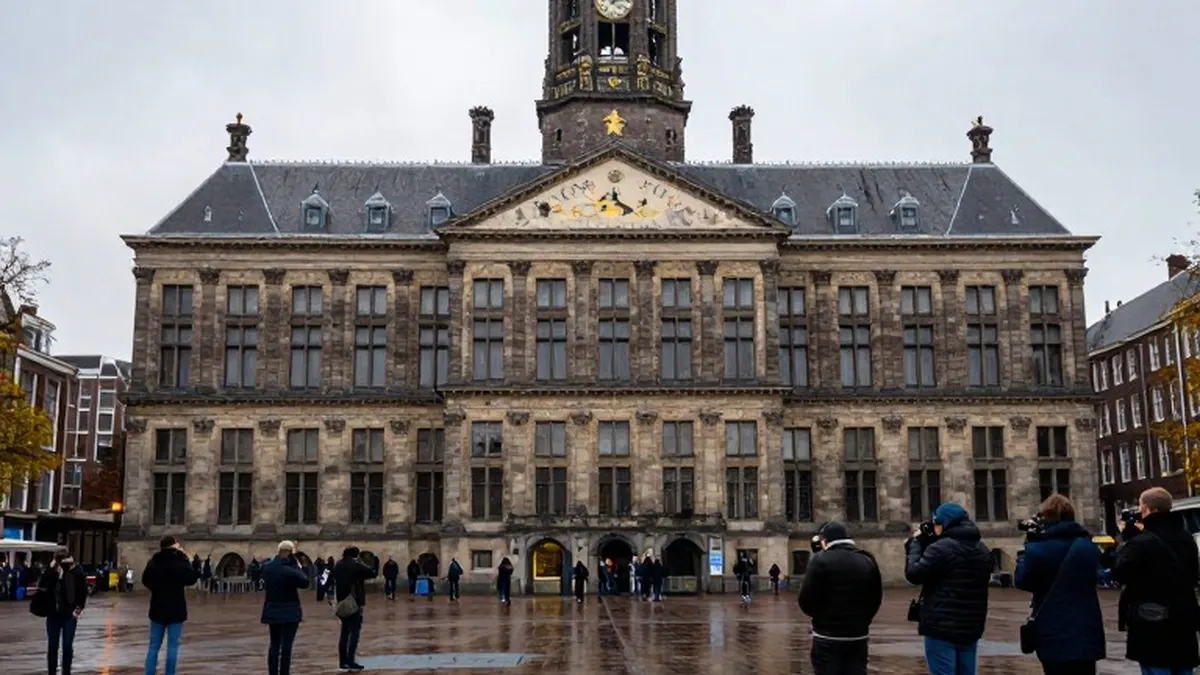
The International Court of Justice is set to rule on whether Myanmar committed genocide against the Rohingya, in a judgment that could mark the first time the court holds a state responsible for genocide. Officials announced on Tuesday that the court's president, Judge Yuji Iwasawa, will read the judgment at a public sitting at the Peace Palace in The Hague at 10am local time on 19 November. The ruling will be final and binding, with no right of appeal.
The case was filed by the Gambia in November 2019, with the backing of the Organisation of Islamic Cooperation, making it the first genocide case brought before the court by a state not directly affected by the alleged crimes. It concerns the Myanmar military's campaign in Rakhine State that began on 25 August 2017, which drove more than 700,000 Rohingya into neighbouring Bangladesh and involved widely documented massacres and rapes. About 1.2 million Rohingya, a predominantly Muslim minority, now live in camps around Cox's Bazar, the world's largest refugee settlement.
Myanmar has denied committing genocide, arguing its forces were conducting counterterrorism operations in response to attacks on police posts by the Arakan Rohingya Salvation Army in August 2017 that killed 12 security personnel. At hearings held from 12 to 29 January 2026, which included closed-door testimony from Rohingya witnesses, Myanmar's counsel also argued the military's aim was to drive the Rohingya out of the country, not to destroy them. The Gambia countered that genocidal intent is the only reasonable inference from the military's conduct, pointing to roughly 10,000 killings, described as a conservative estimate, and decades of restrictions on Rohingya marriage, births, movement and healthcare.
Sexual violence sits at the heart of the Gambia's case. Antonia Mulvey, an international human rights lawyer who investigated sexual violence against the Rohingya for the UN in 2017, told Middle East Eye's Expert Witness Podcast that soldiers systematically surrounded villages, opened fire, set homes alight and selected women and girls for rape. "They would rape women and girls in public, in front of their family members, in front of their children, in communal areas," she said, describing mass gang rapes of up to 40 women and girls at a time. One survivor told her: "I was lucky, I was only raped by three men." Mulvey said a finding that rape constituted genocide would be "a landmark decision", adding: "It was the scale and the brutality of the sexual violence that we didn't see in previous cases before the International Court of Justice."
The judgment will be only the third time the ICJ has ruled on the merits of a genocide case, and the first in more than a decade. In 2007 the court found genocide was committed at Srebrenica but held Serbia responsible only for failing to prevent and punish it, while in 2015 it found genocide had not been proven in Croatia's case against Serbia. A central legal question will be how the court applies the "only reasonable inference" test, which governs how intent to destroy a group can be proven without direct evidence such as an explicit order.
The case has drawn unusual international engagement, with eleven states intervening, including Canada, France, Germany, the Netherlands and the United Kingdom. Mike Becker, an assistant professor of international human rights law at Trinity College Dublin and a former ICJ associate legal officer, said the judgment would be the court's first merits ruling in a case with large-scale third-state intervention. "The outcome here may determine whether that trend will continue," he said. In October, US Ambassador to the UN Mike Waltz accused Navi Pillay, the ad hoc judge appointed by the Gambia, of seeking to lower the threshold for proving genocide, a claim Mulvey rejected as "misleading", saying the Gambia argues the threshold has been met, not that it should be lowered.
Legal experts expect the outcome to reverberate across other genocide-related cases pending before the court, most pressingly South Africa's case against Israel over its war in Gaza, where the confirmed death toll has reached almost 75,000 people, as well as Ukraine v Russia, Nicaragua v Germany and the Democratic Republic of the Congo v Rwanda. Chris Sidoti, a former member of the UN fact-finding mission on Myanmar, noted the ruling will also reveal how the court handles fact-finding. "The International Court of Justice is not a fact-finding tribunal. It doesn't have an investigative arm," he said. "Here it's got a fact-finding task ahead of it."
For Rohingya survivors, the stakes are deeply personal. They want the court to find Myanmar responsible and order the return of their land and property, compensation and prosecutions, and above all citizenship, which they are denied under Myanmar's 1982 citizenship law. "At the very minimum, they want recognition," Mulvey said. Becker said any remedy ordered could be groundbreaking, particularly if the court requires Myanmar to undertake domestic reforms guaranteeing citizenship rights and non-discrimination.
Myanmar is bound to comply with the judgment, and if it does not, the Gambia can refer the matter to the UN Security Council, which has never enforced an ICJ ruling. The country has been in civil war since Min Aung Hlaing, the commander behind the 2017 operations, overthrew Aung San Suu Kyi's civilian government in a February 2021 coup. He stepped down as army chief in April this year and was later elected president by a military-dominated parliament. Separately, the International Criminal Court prosecutor applied in November 2024 for an arrest warrant for Min Aung Hlaing over the deportation and persecution of the Rohingya, and in February 2025 a court in Argentina ordered arrest warrants for 25 Myanmar officials, including Min Aung Hlaing and Suu Kyi. Several governments, including the US and Canada, have already described the violence against the Rohingya as genocide.
Source: Middle East Eye