Iran Executes Two Men and Confirms Death of Officer in Southeastern Attack
The executions follow convictions from the January protests, while new violence in Sistan-Baluchistan has led to the arrest of 16 suspects.
By Stefan Greco ·
Tensions in Iran’s border regions have intensified as security forces report a fresh killing in the southeast while the judiciary moves forward with high-profile executions tied to the recent nationwide unrest. The developments occurred on Tuesday, adding to a week of reported clashes in the Sistan-Baluchistan province.
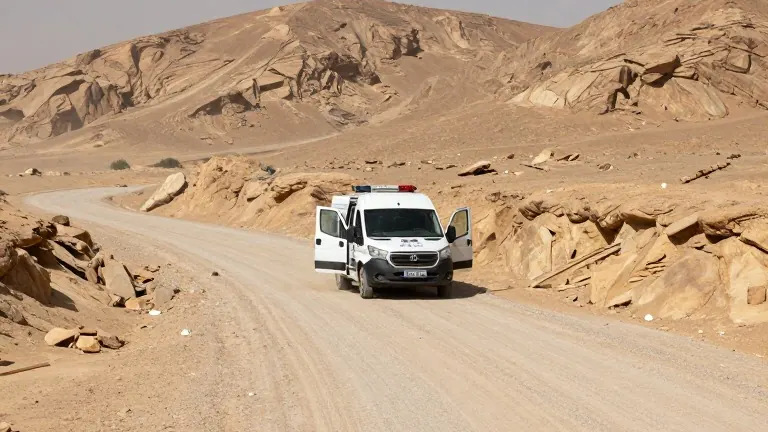
State television announced that Third Lieutenant Hojat Vafakardeh of the Criminal Investigation Police was killed by unidentified armed assailants in Saravan county. The police statement described the officer’s death as an honor of martyrdom and stated that security forces were continuing efforts to identify and arrest those responsible. The province is one of Iran’s poorest regions and borders Pakistan and Afghanistan. It is home to a large Baluch population, many of whom are Sunni Muslims in a country that is predominantly Shia. The area has seen recurring clashes between security forces and separatist or armed groups.
In the same region, the Mehr news agency reported on Monday that a vehicle carrying engineers and contractors was attacked. A local Revolutionary Guards unit said it ambushed a team it labeled as a terrorist group before they could carry out an operation, resulting in one death and several arrests. On Thursday, the intelligence ministry claimed it dismantled four cells of a takfiri group, arresting 16 people. Three additional individuals were detained for allegedly transmitting information to what the ministry called US-Zionist centers. These actions follow the deaths of two security personnel in separate shootings in mid-October.
In central Iran, the judiciary executed two men on Tuesday for their roles in the killings of four police officers during the January protests. The men, Amirhossein Maleki and Amirhossein Ebrahimi, were hanged after the Supreme Court upheld their death sentences following appeals. The judiciary’s Mizan Online website reported that the pair were armed and present at the scene of the crime in Isfahan. They were sentenced to death on charges of moharebeh, or waging war against God, and corruption on earth through actions against national security. Two other men, Alireza Sepahi and Alireza Raissi, were executed in early October for the same case.
The January protests began in December over a surge in foreign currency rates and escalated into anti-government demonstrations that peaked on January 8 and 9. Tehran has accused Israel and the United States of fomenting the unrest. Official figures state that more than 3,000 people, including security personnel, were killed during the clashes, while rights groups based abroad cite higher numbers.
The number of executions in Iran has risen since the start of the US-Israel war on Iran in late February. Amnesty International states that Iran carries out more executions than any country except China.
Source: The Times of Israel