Netanyahu Challenges Election Results as Knesset Seating Approaches
The prime minister's legal bid to delay certification mirrors tactics used in the United States, while opposition leaders race to form a coalition before November 10.
By Stefan Greco ·
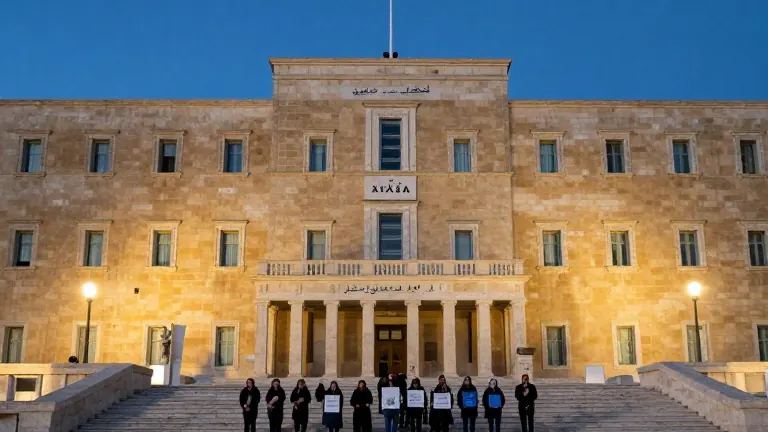
The new Israeli parliament is set to convene next week despite an ongoing legal dispute over the election results.
Prime Minister Benjamin Netanyahu and his allies are pursuing legal channels to delay the transfer of power. They argue that investigations into voter fraud and foreign interference require a postponement of the vote certification. This strategy draws direct comparisons to the tactics employed by Donald Trump during the 2020 United States presidential election.
The controversy has expanded beyond the courtroom and into the media sphere. Yinon Magal, host of the pro-government show 'The Patriots' on Channel 14, has amplified the incumbent's narrative. His program, which reaches over 100,000 viewers nightly, recently labeled the situation the 'Ballot Box Terror Affair.' Magal has promoted claims that voters were paid to support two Arab-led parties. Those parties together secured a historic 19 seats in the Knesset. He also criticized left-wing media for failing to show enough outrage over the alleged manipulation.
Political observers note that the structural differences between the two political systems make a direct repeat of the January 6, 2021, Capitol storming unlikely in Israel. The United States has a long gap between election day and inauguration, which allows time for legal challenges to gain momentum. In Israel, the timeline is much shorter. The vote is counted within days and certified about a week later. The new Knesset is scheduled to take office on November 10, leaving little room for procedural disputes to alter the immediate schedule.
Netanyahu's primary strategy may be to block the formation of a governing coalition rather than reverse the election outcome. The Knesset is fragmented into at least three blocs, with no single majority. If opponents cannot form a stable government, a new election will be called. Netanyahu would continue to serve as caretaker prime minister in the interim. This approach offers multiple opportunities to delay his removal, a flexibility not present in the more absolute transfer of power in the US system.
This is not the first time Netanyahu has faced a transition of power. He was unseated in 2021 and again earlier in his career. In both instances, he left office peacefully, though reluctantly. During the 2021 transition, his allies heckled incoming Prime Minister Naftali Bennett. Netanyahu himself joked about the orderly transfer, saying, 'No, there will be a revolution,' before adding, 'What idiotic questions.' That video was later shared by Magal, illustrating the long-standing bond between the prime minister and his media supporters.
Tension is already visible on the streets. Supporters have gathered outside the home of Gadi Eisenkot, Netanyahu's main rival. One protester accused Eisenkot of responsibility for his son's death in battle. A campaign sign for Naftali Bennett was set on fire in Tel Aviv. These scenes echo protests from 2023 against the judicial overhaul, but the current atmosphere carries a new sense of uncertainty regarding the democratic system.
The opposition is responding with urgency. Yair Lapid, the leader of the opposition, described Netanyahu's actions as an 'extreme and dangerous attempt to disqualify the election.' Leaders of the Jewish-led opposition parties issued a joint statement declaring their intent to form a 'national emergency government.' They aim to put the parliamentary majority to work immediately to remove Netanyahu and his allies from the Prime Minister's Office.
The path to a stable government remains complex. The opposition must either partner with Arab parties or peel members away from Netanyahu's bloc. Polls had predicted an inconclusive result for months, and voters delivered precisely that. Democratic gatekeepers are holding firm against the push to disrupt the process. Justice Noam Sohlberg, who chairs the Central Elections Committee, rejected Likud's request to delay certification. He stated that the committee lacks the authority to postpone the process and that doing so would contradict fundamental democratic principles. Both the Central Elections Committee and the Shin Bet intelligence agency have affirmed that the election was conducted properly.
Historical precedents suggest that violence at the Knesset is not without precedent. On January 7, 1952, a mob stormed the legislative building in protest against reparations from West Germany. Right-wing leader Menachem Begin had addressed the crowd before thousands breached police lines. The crowd threw stones and injured officials before being dispersed with tear gas and fire. As the new Knesset prepares to be seated, the focus shifts to whether Netanyahu can disrupt the next milestones or if his opponents will move quickly to unseat him.
Source: The Times of Israel