Louisiana drops its main plan to rebuild the sinking coast
The state abandoned large-scale river diversions, leaving only smaller restoration projects as the coast continues to vanish at a record rate.
By Stefan Greco ·
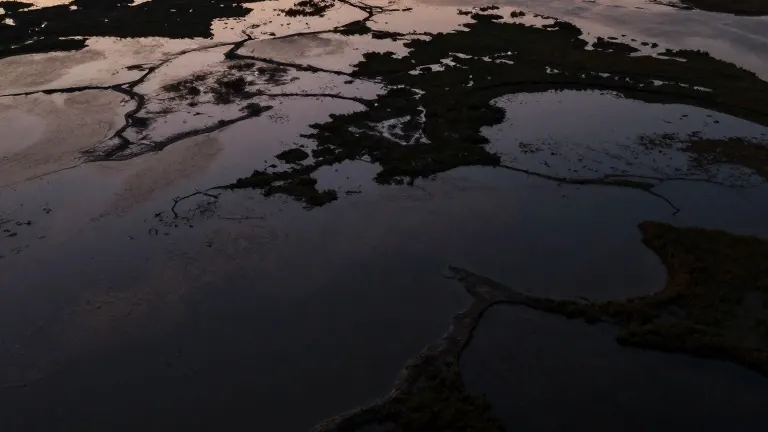
The administration of Governor Jeff Landry has abandoned the state's primary strategy for rebuilding its eroding coastline. Officials dropped plans for large-scale sediment diversion projects, which had served as the core of Louisiana's coastal program for years. This decision aligns the state with critics, including many commercial fishermen, who argued that diverting massive amounts of river water would damage marine life and fisheries.
The shift leaves the state relying on smaller efforts to combat a rapid loss of land. Since 1932, the U.S. Geological Survey estimates Louisiana has lost roughly 2,000 square miles of wetlands. A recent study by the University of California determined that South Louisiana is sinking faster than any other river delta on Earth. The causes include natural subsidence, rising sea levels, and canals dug for oil fields that disrupted natural tidal flows.
The Mississippi River once built the delta by depositing sediment during annual floods. The 1927 levee system cut the river off from the land it once nourished. Geologist Chris McLindon noted that the volume of sediment the river delivered over centuries is comparable to the Himalayas flipped upside down, reaching five miles deep. Modern studies indicate the river now delivers significantly less sediment, with much of it trapped behind locks and dams upstream from New Orleans.
The delta spans roughly 2.7 million acres and holds the largest brackish marsh area on the North American continent. It supports fisheries, wildlife habitat, and serves as a critical flyway for migrating birds. Foster Creppel, a coastal activist in Plaquemines Parish, described the area as having more life in its wetlands and swamps than almost anywhere else on the planet.
The loss of wetlands removes a natural buffer against hurricane storm surge. Mark Davis, a research professor at Tulane University, compared the situation to other coastal cities. He noted that unlike Miami or Norfolk, Virginia, Louisiana cannot rely on a static coast to separate it from hurricane landfalls. The state has restored 55,000 acres and more than 70 miles of barrier islands through various projects, but the pace of loss outstrips these gains.
Creppel remains optimistic that Louisiana can overcome internal divisions to save the estuary. He stated that if the state continues to fight over the issue, it has no chance of success. The next step involves determining how to proceed with restoration efforts without the large diversions that were previously central to the plan.
Source: WBRC FOX6