Louisiana abandons key coastal protection plan
The state scrapped large-scale sediment diversions after commercial fishermen raised concerns about marine life impacts.
By Karim Graham ·
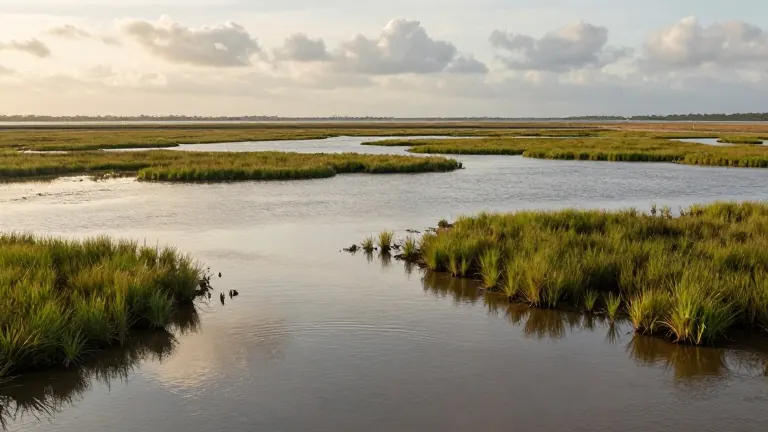
Residents of South Louisiana face a shrinking coastline as the state removes a primary tool from its restoration strategy. The Mississippi River Delta, spanning roughly 2.7 million acres, contains the largest area of brackish marsh in North America. This wetland system supports fisheries, wildlife habitats, and serves as a migration route for birds. Foster Creppel, a coastal activist in Plaquemines Parish, described the area as holding more life than almost any other place on the planet.
The region is experiencing rapid land loss. The U.S. Geological Survey estimates that Louisiana has lost approximately 2,000 square miles of wetlands since 1932. A recent University of California study identified South Louisiana as sinking faster than any other river delta on Earth. Factors contributing to this decline include subsidence, sea-level rise, oil field canals that disrupt tidal flows, and the Mississippi River levee system built after the 1927 flood.
Historically, the river built land by delivering massive amounts of sediment. Chris McLindon, a geologist active in coastal issues, compared the volume of sediment delivered to the Gulf Coast to the Himalayas flipped upside down and reaching five miles deep. Modern studies indicate the river now carries much less sediment, with a large portion trapped behind locks and dams upstream from New Orleans. This reduction removes a natural buffer against hurricane storm surge and sea-level rise.
Mark Davis, a research professor at Tulane University, noted that few other U.S. cities possess such a protective coastal barrier. He contrasted the situation in New Orleans with Miami and Norfolk, Virginia, where residents lack a similar land-based defense against landfalls and rising seas.
Louisiana has previously restored over 55,000 acres and more than 70 miles of barrier islands. However, the state recently changed its approach by abandoning plans for large-scale sediment diversion projects. These diversions had been central to the coastal program. Governor Jeff Landry’s administration aligned with critics, including many commercial fishermen, who feared that diverting large volumes of river water would harm marine life and commercial fisheries.
The shift leaves the long-term stability of the delta in question. Creppel remains hopeful that the region can resolve internal disagreements. He stated that saving the estuary requires unity, arguing that continued fighting over the issue eliminates any real chance of success.
The state’s new direction prioritizes the immediate concerns of the fishing industry over the long-term structural changes required to rebuild the delta. The decision effectively halts the major water and sediment transfer projects that engineers and some activists viewed as essential to reversing the trend of land loss.
Source: WBTV