Louisiana drops 2,000 square miles of coast
The state’s delta is sinking faster than any other river system on Earth, prompting a major shift in restoration strategy.
By Marco Vargas ·
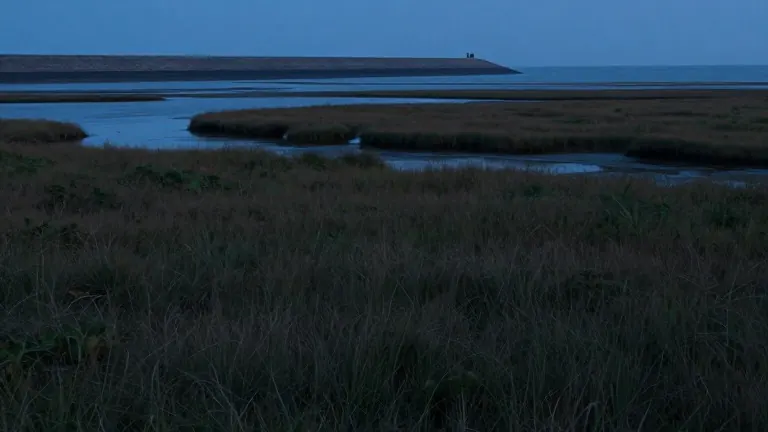
The U.S. Geological Survey estimates Louisiana has lost approximately 2,000 square miles of wetlands since 1932. This erosion is transforming the Mississippi River Delta, a region that once covered roughly 2.7 million acres and contained the largest expanse of brackish marsh in North America.
Scientists identify a combination of factors driving this rapid land loss. Subsidence and rising sea levels play key roles, but human infrastructure has accelerated the decline. Canals dug for the oil industry disrupted natural tidal flows, while the levee system constructed after the 1927 flood isolated the delta from the river. A recent study from the University of California found that South Louisiana is sinking at a rate exceeding that of any other river delta globally.
The Mississippi River no longer builds land as it once did. Historically, annual floods deposited massive amounts of sediment, a volume geologist Chris McLindon compared to the Himalayas flipped upside down and sunk five miles deep. Today, locks and dams far upstream trap much of that sediment. The river remains largely cut off from the delta it nourished, depriving the coast of the material needed to rebuild itself.
This loss has tangible consequences for coastal communities. The wetlands serve as a natural barrier against hurricane storm surge. Mark Davis, a research professor at Tulane University, noted that other coastal cities in the United States, such as Miami and Norfolk, lack the same capacity to maintain a buffer between their populations and the water. In Louisiana, the shrinking coastline reduces that protective shield.
State officials are adjusting their response to this crisis. The administration of Governor Jeff Landry has abandoned plans for large-scale sediment diversion projects. These projects were previously central to the state's coastal program. Commercial fishermen and other critics argued that diverting large volumes of river water would damage marine life and local fisheries. The state has already built projects that restored more than 55,000 acres and over 70 miles of barrier islands, but the change in direction highlights the difficulty of balancing ecological needs with economic interests.
Foster Creppel, a coastal activist in Plaquemines Parish, argues that the state must unify its efforts to preserve the estuary. He stated that continuing to fight over the approach eliminates the chance of saving the coast. The delta supports vast fisheries, wildlife habitat, and serves as a critical flyway for migrating birds, making the preservation of these wetlands a matter of both ecological and economic importance.
Source: Atlanta News First