Key Bridge Rebuild Cost Hits $5 Billion as Governor Faces Election
Maryland's Francis Scott Key Bridge reconstruction is now projected at $5 billion with a 2030 completion date, while other major infrastructure and social promises show mixed results ahead of the Tuesday vote.
By Stefan Greco ·
Maryland Governor Wes Moore faces reelection on Tuesday with a mixed record on major infrastructure and social initiatives that defined his first four years in office.
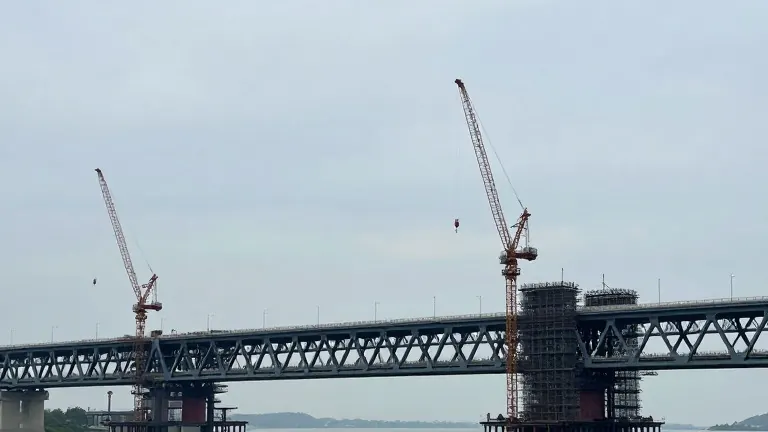
The most visible shift in his portfolio concerns the Francis Scott Key Bridge, which collapsed in 2024 after being struck by the cargo ship Dali. Initial estimates for the rebuild stood at approximately $2 billion with a target completion year of 2028. By late 2025, the projected cost had risen to $5 billion, and the timeline extended to 2030. This spring, state officials terminated a design-build contract with the engineering firm Kiewit due to cost concerns. The state has since fragmented the project into separate contracts, a process that may push the completion date beyond 2030.
Federal funding remains a central variable for the bridge project. Congress approved 100% federal coverage for the rebuild, exceeding the standard 90% allocation for such infrastructure. Maintaining this funding level while managing inflation presents a continuing financial challenge for the state treasury.
Construction on the Baltimore Red Line has not yet begun, despite Moore's 2023 statement that work would start in 2026 or 2027. The state budget includes funds for continued planning but lacks allocation for construction. While Moore originally envisioned a light rail system, state officials are currently evaluating a pivot to bus rapid transit. The exact route remains unsettled, and the state must balance this project against other transportation needs within the Transportation Trust Fund.
Moore's pledge to end child poverty in Maryland faces headwinds from federal policy changes. According to the Annie E. Casey Foundation’s KidsCount survey, about 11% of Maryland children lived in poverty in 2024, down from nearly 14% a decade earlier. In 2024, Moore passed the ENOUGH Act, directing tens of millions of dollars to programs in high-poverty neighborhoods. However, federal cuts to safety-net programs, including Medicaid and the Supplemental Nutrition Assistance Program, have complicated the state’s efforts.
Public safety metrics show improvement in the capital city. Baltimore recorded 133 homicides last year, the lowest number since at least 1970. In a spring poll by the University of Maryland, Baltimore County, only 6% of respondents identified safety as their top concern. This figure trails affordability, cited by 33%, and taxes, cited by 15%. A separate April poll of city residents found crime ranked third, behind energy costs and poverty.
The state has expanded its service programs under Moore’s initiative to make Maryland a serving state. The Department of Service and Civic Innovation has matched 1,200 participants with more than 300 partner employers over the first three years. The fourth class of the Maryland Corps and Service Year Option programs launched in September.
Internet access expansion has progressed but remains incomplete. The state estimates that 13,500 residents lack high-speed internet access, a reduction from 67,400 when Moore took office. Baltimore City and Talbot County have achieved 100% coverage. The remaining 22 jurisdictions have funding allocated for projects intended to connect all residents. State Housing Secretary Jake Day has indicated that 2030 is the current goal for universal access, moving beyond Moore’s initial target of the end of his first term.
Source: The Baltimore Banner