Serbian Vote: Vucic Faces Student Rivals Amid Register Doubts
With polls showing a dead heat, election day arrives amid scrutiny of voter lists and allegations of foreign interference.
By Marco Vargas ·
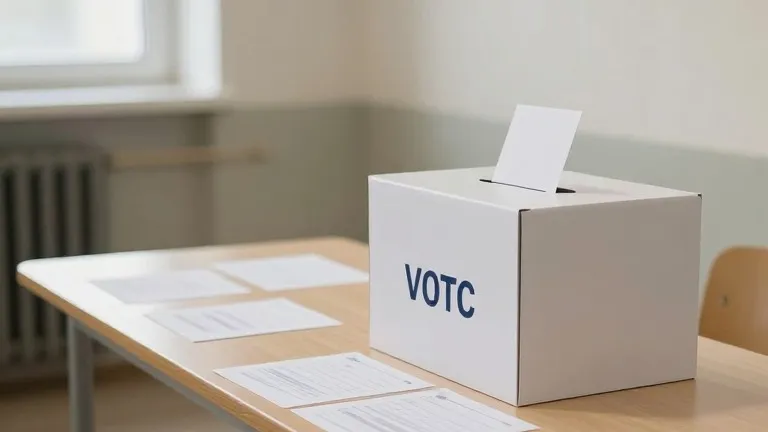
Serbians head to the polls on October 25 for a parliamentary election that analysts describe as the first in over a decade with an uncertain outcome. The contest pits Aleksandar Vucic, who has controlled Serbian politics for fourteen years, against a decentralized student movement that rose from recent mass protests. Vucic, who stepped down as president in late September to avoid a third term, is now running for prime minister, a post he held from 2014 to 2017.
The fairness of the vote is under intense examination. A review by RFE/RL's Balkan Service found approximately 500,000 registered voters lacked complete addresses, often missing street names or house numbers. Hundreds were listed at public facilities like social welfare centers or at homes that could not logically hold that many people. The Organization for Security and Cooperation in Europe has deployed 300 observers, but an interim report contradicted the government's claim that all recommendations from the 2023 mission were implemented. Investigations also noted an increase in eligible voters from Bosnia and Kosovo, regions that traditionally support Vucic's Progressive Party among ethnic Serbs.
The student opposition lacks formal leaders and features a candidate list of largely nonpartisan figures, including university professors. Cardiologist Ilija Srdanovic heads the list, though the movement clarified his position does not guarantee a premiership. Vladimir Bilcik, a former European Parliament rapporteur for Serbia, noted the genuine uncertainty of the result. Current polling indicates the electorate is deeply divided between the ruling coalition and the protest movement.
The election takes place days before the second anniversary of the Novi Sad tragedy. On November 1, 2024, a renovated canopy at the city's railway station collapsed, killing sixteen people. The disaster fueled protests over corruption at a flagship construction project led by Chinese businesses. Authorities responded with police force and arrests, including a severe incident on March 15, 2025, where a sonic weapon was allegedly used against demonstrators. Vucic announced his resignation and the early vote following another student protest in June.
Allegations of illegal surveillance and arrests of opponents have complicated the climate. A US Senate Foreign Relations Committee statement on October 21 cited reports of monitoring opposition members and attempts to undermine observation missions. Research by the Serbian nonprofit SHARE and Toronto University researchers alleged that at least sixteen cases of the Pegasus surveillance software, which is illegal in Serbia, were used in 2026. While the opposition blames the authorities, government officials have denied targeting rivals.
International dynamics weigh on the campaign. Some US lawmakers and the European Parliament have raised concerns about Russian influence, with Republican Congressman Joe Wilson stating that Moscow is deploying resources to monitor Serbian citizens and the student movement. Russian President Vladimir Putin has personally expressed support for Vucic. Vucic has pledged to maintain his foreign policy, including refusing EU calls for sanctions against Russia over its invasion of Ukraine. Serbia's EU integration has stalled, with no new accession chapter opened since late 2021.
Source: RFE/RL