British Households Build Reserves Against Rising Threats
New government advice prompts a shift in shopping habits as families prepare for potential supply disruptions and extreme weather events.
By Karim Graham ·
Supermarket aisles in Britain are seeing a new kind of urgency.
Ministers launched a national campaign on Thursday that asks residents to maintain enough food, water, and essential goods for three days. The directive aims to help families withstand various shocks, from power outages to infrastructure failures. While the advice was formalized this week, many households had already begun adjusting their routines in recent months.
The government’s Be Ready initiative cites specific risks, including Russian state-sponsored terrorism and the accelerating effects of the climate crisis. These factors are driving a tangible shift in consumer behavior across the country. Shoppers are no longer just buying for the immediate week; they are calculating longer-term needs. This represents a measurable change in how British families approach their weekly grocery runs.
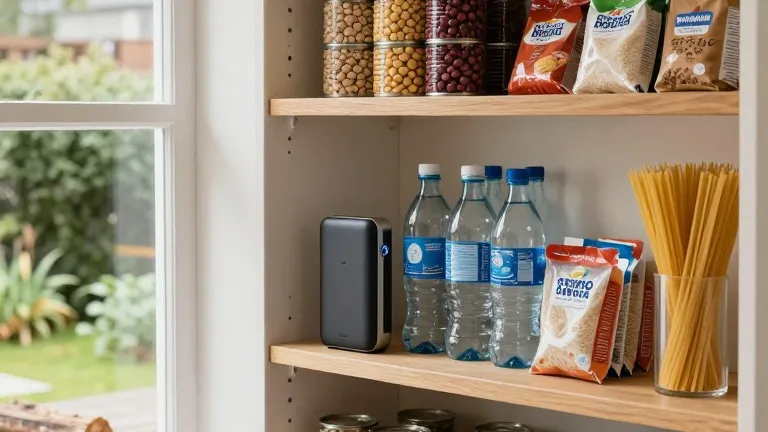
Lawrence Barratt of Hythe in Hampshire exemplifies this new approach. He began increasing his stockpiles about two weeks after seeing the government’s online guidance. Barratt now adds beans, soups, chilli con carne, noodles, and rice to every weekly shop. He is also gradually purchasing bottled water to ensure he has enough for two people for the full three-day period. His preparations extend beyond food to include a first aid kit, a battery-powered FM radio, a torch, and a portable power bank used for camping. He believes this setup could charge phones, run a television, and power a small fan heater if the grid fails. Barratt noted that memories of empty shelves during the 2020 lockdown influenced his decision. He admitted the campaign made him realize he "would be completely unprepared for anything."
Marco Camurri in Greenwich, London, has been preparing for several months, citing early reports of supply chain disruptions linked to El Niño. His family is collecting pasta, passata, stock cubes, tinned food, bottled water, medicines, and toilet paper. Camurri explained that his relatives in continental Europe offer a temporary refuge if the UK enters war or faces direct attacks. He also keeps wood in his garden to light a barbecue for boiling water in an emergency. The household maintains charged power banks, USB flashlights, matches, and lighters, and keeps their car fuel tank above 50 percent, which allows for approximately 300 miles of driving. To manage these supplies, the family is creating a spreadsheet to track expiry dates. They aim to eat and replace items before they spoil, a process Camurri described as "Doomsday Stash" planning. He noted that because they consume what they stock, the effort feels like one extra week of shopping for staples.
Jack Davenport in North Shields also pointed to El Niño as a primary motivator, though he found it difficult to gauge the scale of the various threats. He listed climate-related disasters, Russian shadow threats, artificial intelligence issues, and interest rate rises driven by energy insecurity as contributing factors. Davenport characterized the country’s physical and technological infrastructure as "creaking and outdated." He suggested the government’s move is designed to "reduce long-term panic" by framing these events as manageable possibilities. He observed that several generations have not faced the kind of hardship that was common before the war.
Not every resident accepts the new guidance with the same seriousness. Deirdre O’Sullivan in Leicester called the advice "daft," comparing it to 1970s instructions to hide under a table during a nuclear attack. She argued that the current recommendations are inadequate for a genuine emergency. O’Sullivan contended that any danger to drinking water should be anticipated more precisely rather than through general stockpiling. She also suggested that an extreme food shortage would likely become apparent over a much longer period than three days. She likened the policy to a plot from the television show Yes Minister, designed to demonstrate that a policy exists even if it is "clearly totally useless."
The campaign has prompted a wide range of responses, from meticulous spreadsheet management to skeptical dismissal. For now, the shelves in homes from Hampshire to London are filling with the essentials of self-sufficiency.
Source: The Guardian