Iran's Khamenei says hopes for US policy shift after midterms are 'seriously mistaken'
Iran's supreme leader dismissed expectations that Democratic gains in the US midterms would soften Washington's stance, as Iranian officials celebrated the results and marked the anniversary of the 1979 embassy takeover.
By Marco Vargas ·
Iran's Supreme Leader Mojtaba Khamenei said on Wednesday that anyone expecting a change in American policy following midterm elections that dealt a blow to President Donald Trump was "seriously mistaken."
"Those who still harbor even the slightest hope that the behavior of the hegemonic system might change through partisan or factional shifts, or who imagine that making concessions to the United States can dissuade it from hostility towards the Iranian nation, are seriously mistaken," Khamenei said in a written statement published on his website. He has not been seen or heard in public since his appointment eight months ago.
Democrats seized control of the US Congress in Tuesday's midterms, a result that reflected voter anger over living costs, tariffs and the US war against Iran, which has sent fuel prices soaring.
Khamenei's remarks came as diplomatic efforts continued to avert renewed fighting in the war, which the United States and Israel launched on February 28 in a bid to destabilize Iran's regime and destroy its ballistic missile and nuclear programs. In June, Iran and the United States agreed to a memorandum of understanding laying out a pathway to a permanent settlement, but the deal quickly unraveled as each side accused the other of violating it. The two have traded intermittent blows and remained locked in stalemate since. "Should such aggressions be repeated, the war's scope will become much wider," Khamenei warned.
Khamenei, 57, was named supreme leader after US-Israeli strikes at the start of the war killed his father, Ayatollah Ali Khamenei. He has communicated only through written messages since taking power in March, amid reports he was badly injured in the strike that killed his predecessor.
Other Iranian officials greeted the election results openly. Iran's chief negotiator in talks with Washington, Mohammad Bagher Ghalibaf, posted on X that "Americans said NO TO WAR, and we endorse this message," adding that if the US government "betrays their public will to serve international paymasters and blackmailers, it will learn our NO comes with a Nightmare." Judiciary chief Gholamhossein Mohseni Ejei said Trump had been "defeated both militarily and politically" and vowed to "inflict further defeats on him."
Iranian media echoed the triumphant tone. A judiciary-run outlet shared a joke circulating on X that "Trump failed at regime change in Iran but he succeeded in Texas," where a Democrat won a Senate race for the first time in decades. The major newspaper Hamshahri ran a front-page image of Trump blindfolded with his head bowed under the headline "Iran's shadow over US elections," while the conservative paper Jam-e Jam declared the result "The twilight of Trumpism." Two senior Iranian sources told Reuters, however, that despite welcoming the Democratic victory, Tehran feared Trump could seek to compensate with a military strike and remained on high alert. Trump, reacting on Wednesday in a Fox News interview, said: "I think a part of it was Iran, but at the same time people understood the importance of what I've done with Iran."
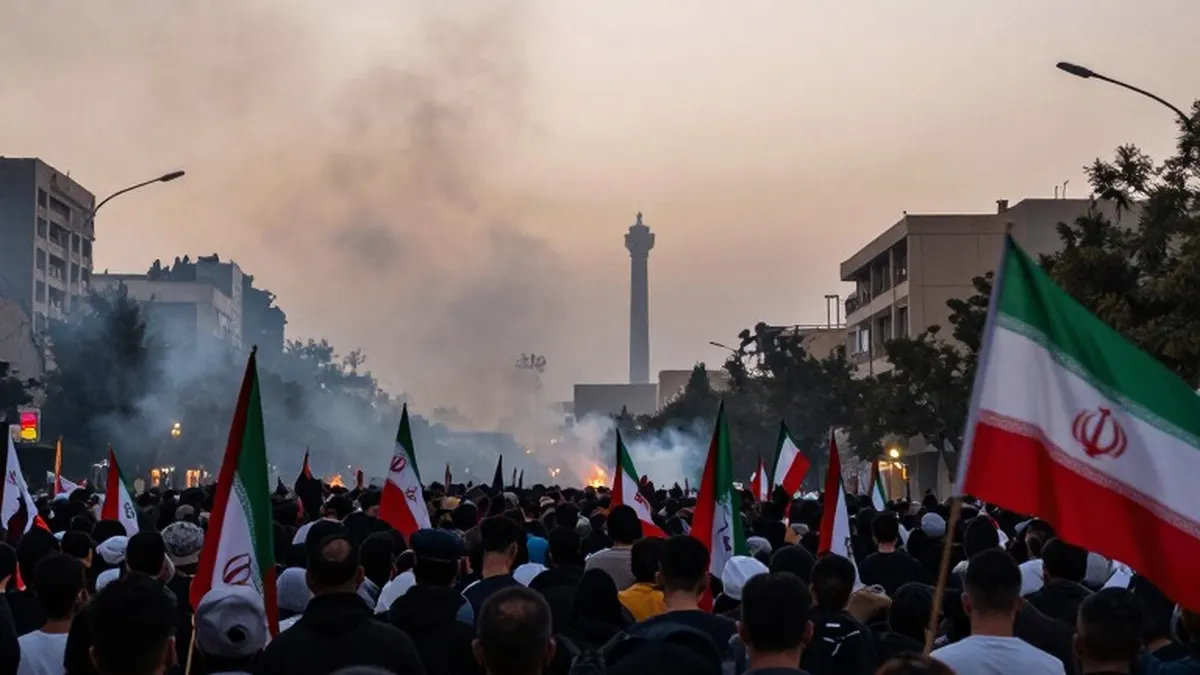
Wednesday also marked the anniversary of the 1979 takeover of the US Embassy in Tehran, with thousands parading through the capital. Demonstrators burned American and Israeli flags, chanted "Death to America" and "Death to Israel," and displayed effigies of Trump and Israeli Prime Minister Benjamin Netanyahu, including one depicting Trump as a ferocious dog poised to attack with Netanyahu holding his leash. Tehran Mayor Alireza Zakani told the crowd that "the decisive defeat of the United States and the Zionist regime in recent developments and elections is the result of the Iranian nation's steadfastness and strength."
On November 4, 1979, Iranian students stormed the US Embassy and took American diplomats and other citizens hostage, holding 52 of them for 444 days until their release on January 20, 1981. The crisis cemented the rupture between the two countries, which have had no formal diplomatic relations for decades.
Source: The Times of Israel