Midterms test American political stability
Polling data indicates a historic shift against the president's party, while questions about election integrity loom over the results.
By Stefan Greco ·
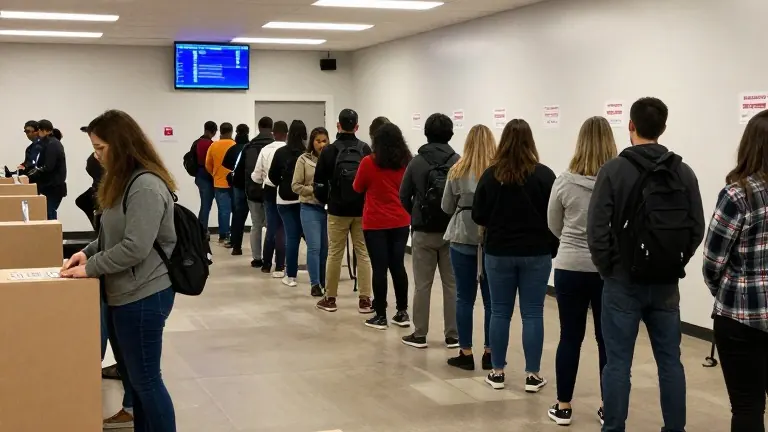
American voters face a high-stakes election this Tuesday that will determine the balance of power in Congress and test the nation's confidence in its political institutions. Polling data suggests the Republican party, led by President Donald Trump, is likely to suffer substantial losses in both chambers. This outcome aligns with a historical pattern where the president's party loses seats in midterm elections.
The current electoral environment presents a challenging scenario for the incumbent party. Trump’s recent approval ratings have dropped to an average of 37%, down from 52% early in 2025. This decline breaks below the 40% threshold that has historically predicted poor midterm results for the ruling party. Consequently, most observers expect the Republicans to lose their slim majority in the House. The Senate race remains too close to call, though Vice President JD Vance’s tie-breaking vote could allow the GOP to retain control.
Trump’s campaign strategy reflects these concerns. During the final weekend of the campaign, the president visited Iowa and Kansas in person. These states present specific risks for his party. Iowa had voted for Barack Obama in 2008 and 2012, and Kansas has not elected a Democrat to the Senate since 1932. By traveling to these locations instead of holding remote rallies in other states, Trump aimed to limit losses in areas where Republican support is wavering.
The personalization of the election contributes to the heightened stakes. Trump has framed the midterms as a referendum on his leadership rather than a standard legislative vote. He has described himself as the architect of a new era, a stance that has energized his base but alienated other voters. Critics have seized on unfulfilled promises regarding inflation and foreign policy. The slogan "No Kings" has gained traction at rallies, reflecting a broader resistance to what opponents view as autocratic tendencies.
Economic factors weigh heavily on voter sentiment. Inflation remains elevated, and the public cites rising gas prices and the cost of everyday goods as primary concerns. Trump had promised to make goods cheaper and tame inflation, but current data does not support those claims. This disconnect between campaign promises and lived experience drives the negative polling numbers seen across the country.
Democrats face their own challenges if they gain control of Congress. A potential majority in the House would be modest by historical standards. In the Senate, a narrow win would empower independent members who may defy party leadership. Internal divisions persist within the Democratic party, particularly between consensus builders and progressive factions. Some candidates aligned with the Democratic Socialists of America have drawn attention, complicating the party’s message for moderate voters.
Political analyst Ruy Teixeira has outlined issues Democrats must address if they regain power. In a set of questions published in October, he asked whether the party would prioritize the interests of working-class voters. He noted a tension between the party’s focus on social policy and the economic needs of white, non-college-educated voters. This demographic has historically been a key group for the Democratic coalition.
Beyond the partisan battle, the election tests the public’s faith in the voting system itself. Nonpartisan experts generally defend the current administration of American elections, noting improvements since the Help America Vote Act of 2002. However, Trump has repeatedly questioned the integrity of polls and news reports. He has a history of disputing election results, as seen in the events of January 6, 2021. This pattern suggests that tensions over the outcome may persist for days or weeks after the votes are cast.
Source: KUNM