Spain's 14.70 Euro Set Lunch Faces Economic and Cultural Shifts
The traditional midday meal, once a state-mandated tourist showcase, is losing daily diners as prices rise and working routines accelerate.
By Stefan Greco ·
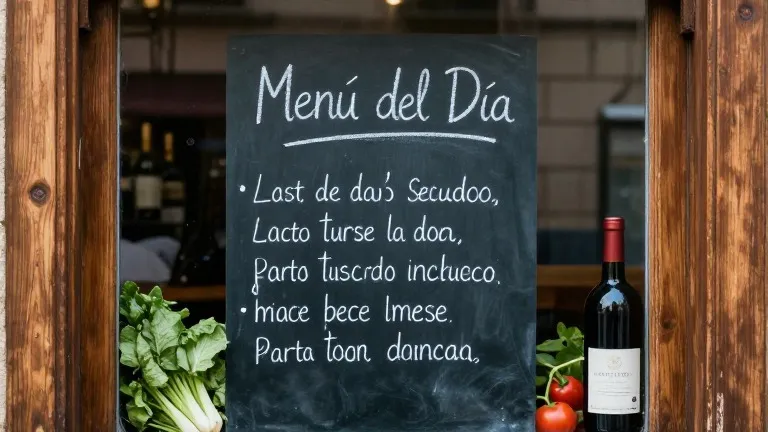
For over fifty years, the midday meal has anchored the daily rhythm of Spanish working life.
Now, that rhythm is shifting as the cost of the traditional set lunch climbs to an average of 14.70 euros.
Approximately four million people still consume the menú del día on any given weekday, though the habit is gradually losing ground.
In 2009, chef Ferran Adrià declared the tradition dead, citing economic downturns and the rise of bistro-style dining where simple meals cost between 20 and 30 euros.
Seventeen years later, food journalist Lakshmi Aguirre argues in her new book that the institution is in trouble but not yet finished.
Aguirre traces the origins of the menu to the mid-1960s, when information and tourism minister Manuel Fraga devised it under dictator Francisco Franco.
The regime created the fixed-price offer to prove to foreign visitors that food was plentiful and affordable following the post-civil war 'years of hunger.'
Laws required establishments to serve a soup starter, a main course of egg, fish, or meat with a side, and a dessert of fruit, sweets, or cheese.
Prices were capped between 50 and 250 pesetas, and the included quarter-litre of wine had to be pure Spanish red or white with at least 12% alcohol.
By the early 1970s, the offer was renamed to distance itself from its tourist roots and encourage domestic consumption.
Aguirre notes that many Spaniards are surprised to learn the menu was a state construct, saying the country tends to forget its recent history quickly.
Current pressures include rising energy and food costs, which make it difficult for small, family-run restaurants to maintain rotating daily choices of starter, main, and pudding with bread and a drink included for 14.70 euros on average today, compared to the historical 50-250 pesetas cap. Many diners now opt for quick lunches, bringing food from home or microwaving supermarket ready meals due to time constraints. Some restaurants have switched to a single 'dish of the day,' while others have incorporated Latin American staples to reflect changing demographics. Aguirre accepts these changes, noting the menu has always mirrored the society that eats it. For her, the loss of the traditional menu represents more than a drop in cheap meal options; she describes it as a loss of a social meeting point where families with limited means can eat out and people living alone find company. The true privilege, she adds, lies in having the time to enjoy the meal, not just the ability to pay for it. Aguirre's criteria for a good venue include simple dishes, a regularly changing menu, non-frozen chips, a chorus of regulars, and a chalkboard free of trendy items like avocado, burrata, tartare, truffle, or sourdough bread.
Source: The Guardian