Taiz Water Crisis Worsens Under Houthi Siege
Houthi forces have cut off supply routes to Yemen's third-largest city, forcing residents to ration drinking water and driving food prices sharply higher.
By Stefan Greco ·
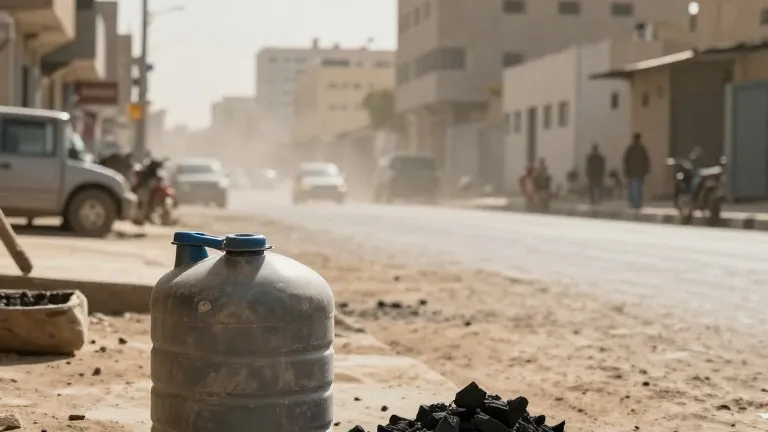
Water supply to Taiz has deteriorated rapidly in recent weeks, pushing the Yemeni city to the edge of a humanitarian crisis. Humanitarian organizations report that access to local wells is restricted, desalination plants lack fuel, and water trucks are frequently blocked from entering. For a population of more than 1 million, these disruptions mean that basic needs are barely being met.
Hadil al-Shahid, a resident of Taiz, described the sharp change in daily life for her family. She previously used about 10 liters of bottled water per day for drinking and cooking. Now, that same amount lasts her family of four for approximately four days. Al-Shahid noted that they have stopped drinking coffee and tea to conserve supplies. The cost of bottled water has increased by as much as 75% in the last few weeks, prompting some households to purchase supplies on credit.
The tightening of the siege began in earnest last month after Houthi forces captured the port city of Mokha. Located about 130 kilometers from Taiz, Mokha is a strategic point for Red Sea shipping. Since then, Houthi forces have advanced on Taiz, seizing control of roads and surrounding land. This expansion has cut off residents from nearby wells and made it harder for outside deliveries to reach the city center.
Truckers who still attempt the dangerous route into Taiz have raised their rates, with some tripling their usual fees. The city's water utility and desalination facilities are operating well below capacity due to fuel shortages. These technical failures compound the logistical challenges posed by the Houthi blockade.
Taiz province has absorbed a large influx of displaced people. United Nations migration experts estimate that 124,000 individuals have moved to the area since August, representing roughly half of the total displaced population from other parts of Yemen. Jens Laerke, a spokesperson for a UN emergency aid division, stated that many of these families live in makeshift shelters or tents. He added that some survive on only one meal a day.
Food prices have surged alongside water costs. Flour and rice now cost about 50% more than they did in the summer. Cooking gas prices have more than quadrupled, according to Hani Bafaqih of the aid group CARE. As a result, some families have returned to burning wood, charcoal, or cardboard for fuel. These shortages have also hindered community kitchens and waste collection services, increasing public health risks.
Amnesty International has urged Houthi forces to open roads into the city immediately. The organization warned that Taiz is approaching a severe humanitarian disaster. Ahmed Abdel Gaber, a displaced resident sheltering in a ruined building, said his income from hauling construction material has become inconsistent. He and his nine relatives rely heavily on donations for food.
The government still holds the center of Taiz, but the siege complicates resupply efforts for its forces. Ahmed Nagi of the International Crisis Group suggested that any attempt by the Houthis to seize parts of the city would likely lead to a prolonged and costly battle. Three anonymous Houthi officials claimed their group controls about 80% of the surrounding countryside and several neighborhoods within the city, although these figures have not been independently verified.
Civilians continue to face direct danger from the conflict. Earlier this week, Houthi missiles struck a residential area in Taiz, killing two teenage girls. Abdel Gaber reported hearing explosions daily from fighting located about 5 kilometers away. Al-Shahid, who owns a hair salon that she had to close due to low customer traffic, said her family cannot afford to leave. She described staying in their home as inevitable, whether it leads to life or death.
The situation in Taiz reflects a widening front in the Iran war. The conflict has intensified pressure on Yemen's third-largest city, straining its aging infrastructure and growing population. As supply lines shrink and prices rise, the daily burden on residents continues to increase.
Source: NPR