The 108-Point Pivot: How a Cyan Glow Will Define the Future of Driverless Cars
Federal regulators are proposing a standardized blue-green light to distinguish autonomous vehicles from human-driven traffic, aiming to cut through the visual noise of modern roadways.
By Fatima Zayed ·
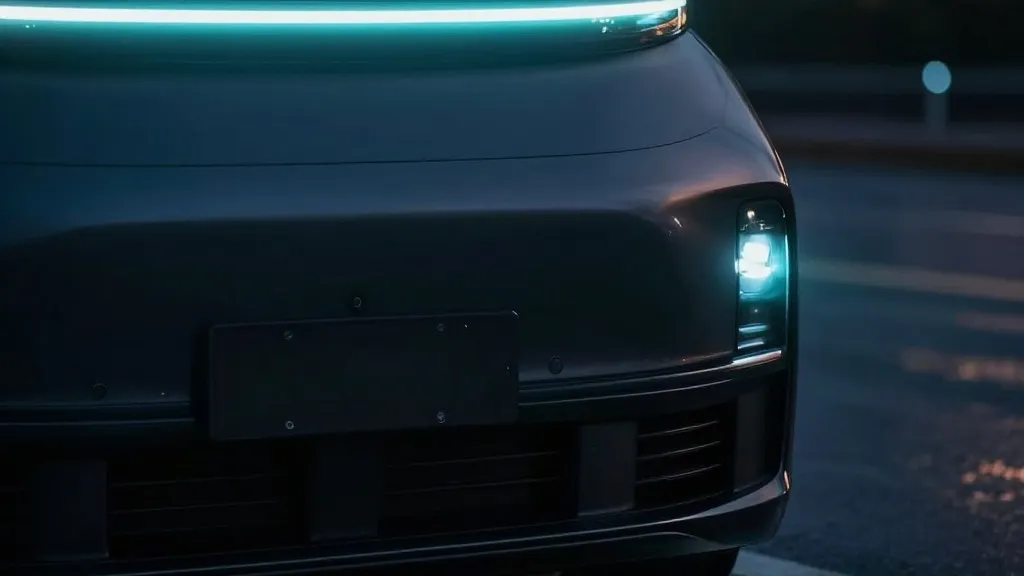
For years, the automotive industry has grappled with a persistent mystery: how does a car without a driver announce its presence to the rest of the world? While engineers debated between flashing text, audio alerts, and custom light patterns, federal regulators have finally stepped in with a singular, decisive answer. The National Highway Traffic Safety Administration (NHTSA) has proposed a specific visual identifier for autonomous vehicles: a cyan-colored marker lamp. This move represents a significant shift from theoretical discussions to concrete federal standards, aiming to establish a uniform language for the rapidly expanding fleet of robotaxis.
The proposal, released as part of updated rules for Federal Motor Vehicle Safety Standard No. 108, rewrites the lighting regulations to accommodate the unique needs of driverless technology. By standardizing the use of a distinct blue-green light, NHTSA intends to create a clear signal for law enforcement and other road users indicating that an automated driving system is in control. The choice of cyan is not arbitrary; it is designed to fill a visual gap in the existing color spectrum used by the auto industry. Currently, red, amber, and white lights are already reserved for critical functions such as braking, turning, and illumination, while flashing blue and red lights are associated with emergency vehicles. Cyan, therefore, offers a neutral, distinguishable hue that should minimize confusion on the road.
There is some historical precedent for this approach, though it has not yet been fully realized at a national level. Mercedes-Benz previously received state-level approval to use turquoise lights on its Level 3 Drive Pilot vehicles, a system the automaker has since abandoned in favor of a different configuration. Despite this corporate shift, the regulatory push suggests that the concept of a dedicated autonomous light remains viable. NHTSA is looking to create a national framework that operators like Waymo, Nuro, and Zoox, along with major manufacturers such as GM and Mercedes, can adopt uniformly, ensuring that a driverless car in one state looks and signals exactly the same as one in another.
Importantly, the proposed rule does not mandate that every autonomous vehicle carry these lights. Instead, the cyan marker lamps would remain optional for manufacturers. However, if an automaker chooses to include them, the federal standards would dictate specific requirements regarding color, brightness, and placement. This ensures that any vehicle utilizing the signal does so in a consistent, legally recognized manner, preventing a fragmented landscape where different companies use slightly different shades of blue or place the lights in confusing locations.
Beyond the new addition, NHTSA is proposing to remove several lighting requirements that are logically unnecessary for vehicles without human drivers. Current regulations demand the presence of physical hazard switches, manual beam shifters, and turn levers inside the cabin. For a car that may eventually lack a steering wheel or pedals, these controls are redundant. The agency plans to eliminate these mandates, allowing for cleaner, more efficient interior designs. Furthermore, the proposal updates the testing standards for 12.8-volt systems to better accommodate modern LED architectures, reducing administrative hurdles for manufacturers building with contemporary technology.
The agency is also considering relaxing rules regarding the physical placement of high-beam and low-beam lights. Currently, regulations dictate whether these lights must sit above or below one another, a constraint that may not apply to future optical systems designed for autonomous operation. By removing these rigid structural requirements, NHTSA aims to give engineers more freedom in designing the front fascia of driverless cars without sacrificing safety or visibility.
This regulatory update is part of a broader administrative push by the Department of Transportation to streamline the deployment of autonomous vehicles. The government’s goal is to make it easier for automakers to design cars that do not rely on traditional human-operated controls. By simplifying the rulebook, the agency hopes to accelerate the transition to a fleet of vehicles that are optimized for algorithms rather than drivers, paving the way for more widespread adoption of robotaxis and other autonomous services.
However, the path toward a fully standardized autonomous fleet is not without friction. While new rules are being proposed to loosen constraints, existing regulations are still being enforced with rigor. Last month, NHTSA opened an audit query into the Tesla Cybercab, examining the technical data and processes Tesla relied on when certifying the vehicle. The investigation focuses on the absence of certain design features, such as sideview mirrors, pedals, and a steering wheel, all of which are currently required under FMVSS. This contrast highlights the current transitional state of the industry: regulators are simultaneously trying to build a new framework for the future while still policing the rules of the present.
As the debate continues over the precise details of these new standards, the introduction of the cyan light serves as a tangible symbol of the industry's evolution. It is a small but significant step toward creating a shared visual language for a new era of transportation. Whether this color becomes the definitive marker of the driverless age remains to be seen, but for the first time, the federal government has provided a clear direction for how autonomous vehicles should announce themselves to the world.
Source: The Verge