Toxic Air: Caltech Study Quantifies Lead Exposure in 2025 LA Fires
Researchers found that smoke from the Eaton Fire contained lead levels 80 times above background, exposing millions of residents during a critical 24-hour window in January.
By Karim Graham ·
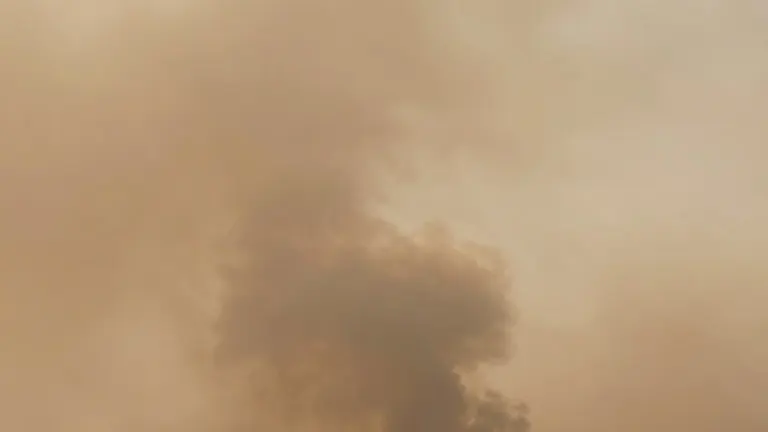
Millions of Los Angeles residents breathed air containing lead levels 80 times higher than typical background concentrations during the first 24 hours of the Eaton Fire, according to a study published Wednesday in Science Advances. The findings reveal that the smoke from the urban fire differed chemically from wildfire smoke, containing higher concentrations of lead, arsenic, and halogens such as chlorine and bromine.
Researchers from the California Institute of Technology analyzed data from the Atmospheric Science and Chemistry mEasurement NeTwork, or ASCENT. This network tracks the size and chemical composition of airborne particulates in real time. The study marks the first time a U.S. network has provided such detailed, hourly chemical breakdowns of smoke during an active fire event.
The Eaton Fire ignited on Jan. 7, 2025, alongside another blaze in the Pacific Palisades. Together, the two fires killed at least 31 people and destroyed more than 16,000 structures. The burning of homes, vehicles, and interior materials released a complex mix of toxic chemicals into the atmosphere.
Nga Lee Ng, an author of the study, noted that the technology allowed researchers to see the detailed components of the particles being inhaled. "The main, key finding is really that wildfire smoke is very different fundamentally from the urban smoke," Ng said. The urban plume contained 50 times more lead, three times more arsenic, and seven times more halogens compared to a 2024 vegetation fire in Riverside County.
Co-author Haroula Baliaka explained that understanding these differences bridges a gap in research. As climate change drives more fires into urban areas, the chemical makeup of the smoke changes. Ed Avol, a professor emeritus at the University of Southern California who was not involved in the study, said the hourly measurements were a major advantage. "Typically we make measurements of airborne particulates and so forth a couple of times a week, at best," Avol said.
Yaguang Wei, an assistant professor at Mount Sinai, noted that the results align with his own research on wildfire toxicity. He pointed out that burning homes releases lead from paint, plastics, and electronics. "I think their findings are not surprising," Wei said. He suggested governments invest in better monitoring and public alerts to protect residents during such events.
The study highlights the exposure of approximately 7 million people to high lead levels during the peak of the burning. Lead is a neurotoxin that can affect children's development and raise blood pressure in adults. Arsenic exposure is linked to various cancers. Scientists continue to investigate the long-term health impacts of short-term, high-dose exposure.
The next step involves using these detailed chemical profiles to improve emergency response strategies. Researchers aim to refine how air quality alerts are issued during urban fires, ensuring that public health measures account for the specific toxic metals released by burning infrastructure.
Source: WCCB