Brazil's Service Sector Surge Reshapes Final Vote
As factories close in cities like Osasco, a growing class of gig workers is challenging Lula's traditional base in the runoff against Flávio Bolsonaro.
By Marco Vargas ·
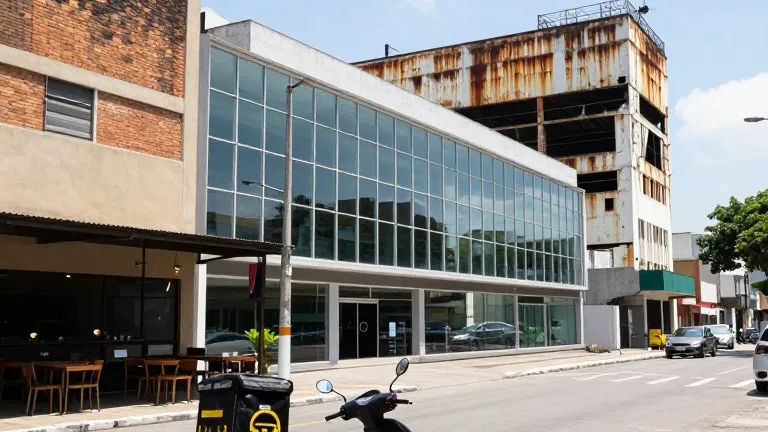
Brazil holds its presidential runoff on Sunday, with the outcome increasingly determined by a shift away from industrial labor toward the service economy. In Osasco, a suburb of São Paulo often called the country's Silicon Valley, former factory sites have been converted into shopping malls and headquarters for delivery applications. The city voted for President Luiz Inácio Lula da Silva in 2022 but supported right-wing candidate Flávio Bolsonaro in this month's first round. Bolsonaro won the national first-round vote, and every first-round winner since 1989 has gone on to assume the presidency.
Gilberto Almazan, head of a local metalworkers' union, describes the rapid deindustrialization of his city. He notes that metal, chemical, and textile plants have vanished, replaced by five new shopping centers. Almazan argues that the union movement which helped launch Lula's political career is now outdated. He states that the working class is no longer primarily industrial, and many workers now seek the flexibility associated with what he terms the Uberization of labor.
Richard Lapper, who has written biographies of both Lula and former President Jair Bolsonaro, describes Brazil as a nation that industrialized late and deindustrialized early. He calls Lula a victim of his own success, noting that while unemployment has hit a record low and Brazil was removed from the United Nations Hunger Map, many citizens feel the strain of high prices and debt. Robson, a 53-year-old civil servant who previously supported Lula, cites heavy taxation as a result of government mismanagement. Tairine, a hot dog vendor who previously abstained, now plans to vote for Bolsonaro, saying she sees no change since Lula returned to office.
Flávio Bolsonaro has proposed reducing government spending and cutting certain taxes while maintaining key welfare programs. He has denied accusations of corruption that have surfaced during the campaign. Voter turnout in the first round was low, with 33 million Brazilians abstaining, the highest number since 1998. Lula's campaign is responding by organizing large street rallies, claiming one event in São Paulo drew approximately one million participants. The 80-year-old president has also used social media to counter claims about his age, referring to himself as the king of selfies.
Support for Lula remains strong among lower-income voters. In Maré, a large favela in Rio de Janeiro, Lula won despite higher-than-average abstention rates. Vitoria, an 18-year-old mother earning less than 300 pounds monthly, praises the increased minimum wage and free essential medicines. She expresses doubt about Bolsonaro's plan to classify the Comando Vermelho gang as a terrorist organization, citing police raids in Rio last year that resulted in more than 130 deaths. Andreza Dionísio, a local resident, attributes the low turnout to last-minute changes to polling station locations and a general sense of hopelessness.
Religious institutions are also influencing the electorate. Evangelical churches, attended by roughly a quarter of Brazilians, have expanded their social services, including childcare and employment advice. Pastor Silas Malafaia, who is currently under investigation for allegedly obstructing the coup trial of his brother Jair Bolsonaro, says Flávio Bolsonaro aligns with church values regarding family and opposition to abortion. Malafaia describes the investigation as politically motivated. The first-round results appeared to reflect a rejection of Lula rather than a strong endorsement of his opponent.
Almazan fears that there will never be another Lula. The final result may depend on whether voters believe the president can offer a new narrative for the country's changing economy. The vote will take place on Sunday, with results expected to determine the next leader of South America's largest economy.
Source: BBC News