Lula Turns Turnout Gap Into Fourth Presidency
A drop in abstention rates flipped a 2.2 million vote deficit into a 4.3 million victory over Flávio Bolsonaro.
By Marco Vargas ·
Luiz Inácio Lula da Silva has secured a fourth term as president of Brazil, reversing a 2.2 million vote deficit to defeat Flávio Bolsonaro by 4.3 million votes. With 99% of ballots counted, Lula received 51.75% of the total, while Bolsonaro captured 48.25%.
The shift was driven primarily by voter participation. The first round in early October recorded a record abstention rate of 21.08%, a figure that disproportionately penalized Lula’s base. In the runoff held Sunday, abstention fell to 19.21%. This increase in turnout provided the margin necessary to overcome the initial gap.
The result breaks a historical pattern in Brazilian democracy. Since the return to democratic rule in the 1980s, no candidate who placed second in the first round had previously won the runoff. Lula, who turns 81 on Tuesday, had trailed after the first round, leading some progressives to question his political future for three weeks.
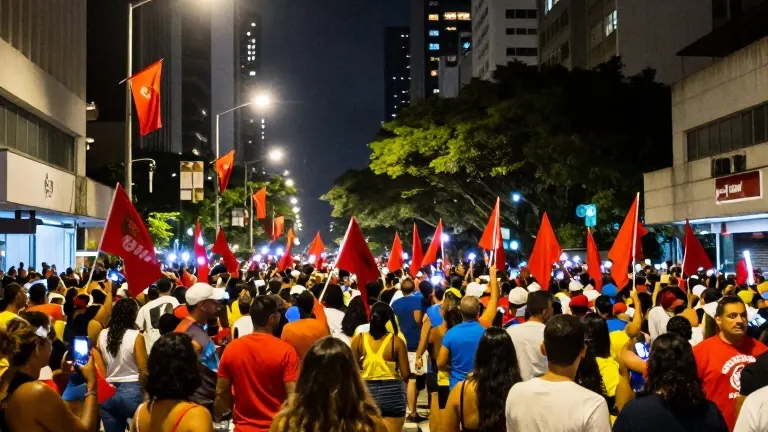
Reginaldo Lopes, a key ally, described the confirmed result as a message to the global right. He stated that Brazil would now work to reorganize democratic forces. The victory comes after weeks of student-led protests and massive rallies, including a gathering of more than a million people on Copacabana beach in Rio.
The outcome deals a financial and political blow to the Bolsonaro family. Jair Bolsonaro, who is serving a 27-year sentence for plotting a coup, had hoped his son’s victory would lead to his release and a government role. He is currently under house arrest in Brasília, where his son watched the vote count.
The win also disrupts US President Donald Trump’s strategy in Latin America. Trump had sought to add Brazil to a bloc of pro-Trump leaders in the region, including Abelardo de la Espriella in Colombia, Daniel Noboa in Ecuador, José Antonio Kast in Chile, and Javier Milei in Argentina.
In São Paulo, voters expressed frustration over an apparent attempt by pro-Bolsonaro politicians to sabotage public transport in areas leaning toward Lula. The effort failed to change the outcome. Caio Marques, a 40-year-old photographer from Franca, noted that the left had awakened for the second round after failing in the first.
Source: The Guardian