U.N. Pulls Troops From Western Sahara After Security Council Standoff
A veto by Russia and a failed counter-proposal left the peacekeeping mission without a mandate, ending 35 years of monitoring in the disputed desert territory.
By Karim Graham ·
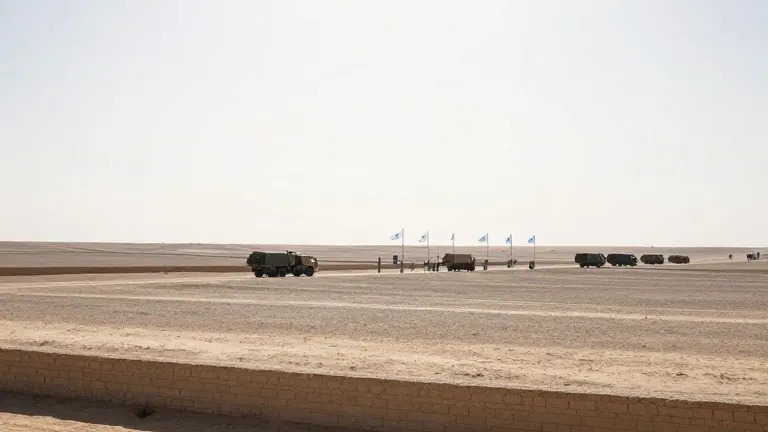
Western Sahara has been the site of Africa's longest-running territorial dispute for decades, a conflict that has now entered a new phase without international observers.
The United Nations Mission for the Referendum in Western Sahara, known as MINURSO, ceased operations on Sunday, November 1, 2026. The withdrawal follows a breakdown in negotiations at the U.N. Security Council earlier this week.
On Friday, Russia vetoed a draft resolution authored by the United States. The U.S. proposal would have supported Morocco's claim to sovereignty and scheduled the end of the mission for the following year. A rival Russian resolution to extend the mandate was subsequently voted down. This procedural deadlock forced the immediate expiration of the force's authority.
Stéphane Dujarric, spokesperson for the U.N. secretary general, confirmed the status change in a written statement. He described November 1 as the start of the liquidation period. A smaller team within the U.N. Department of Operational Support will now manage the return of assets to troop-contributing countries and the disposal of U.N. equipment.
The mission was established in 1991 to monitor a cease-fire and prepare for a referendum on self-determination. That vote never took place due to disagreements over voter eligibility lists. Morocco argued for including residents of the territory it controls, while the Polisario Front insisted on using the colonial census from the Spanish era to prevent a skewed result.
The withdrawal leaves a security gap in a region rich in minerals and fisheries. Morocco administers most of the territory, excluding a narrow strip east of a sand wall known as the free zone. The Polisario Front, backed by Algeria, operates from refugee camps in Tindouf and seeks independence for the Sahrawi people.
Reaction to the decision was sharp along the lines of the existing alliances. The Moroccan royal palace welcomed the non-renewal, labeling the mission an instrument to internationalize the dispute. The Polisario Front called the decision unacceptable, while the Algerian foreign ministry expressed profound regret. Algiers criticized the U.S. draft for excessive bias. The two neighbors severed diplomatic ties in 2021, and the end of the mission adds pressure to their already strained relationship.
The force had an authorized strength of 534 personnel and a 2026-2027 budget exceeding $62 million. Egypt, Ghana, and Pakistan were the top military contributors. Since the Polisario Front withdrew from the cease-fire in 2020, the U.N. has noted ongoing low-intensity hostilities. The secretary general has called on all parties to exercise maximum restraint and respect the rights of the people of Western Sahara.
Source: WFAE