North Carolina Vote: Democratic Turnout Outpaces Republicans
Early voting data shows a stark partisan divide, with Democrats setting a mid-term record while independent voters cast ballots at high rates ahead of Tuesday's election.
By Marco Vargas ·
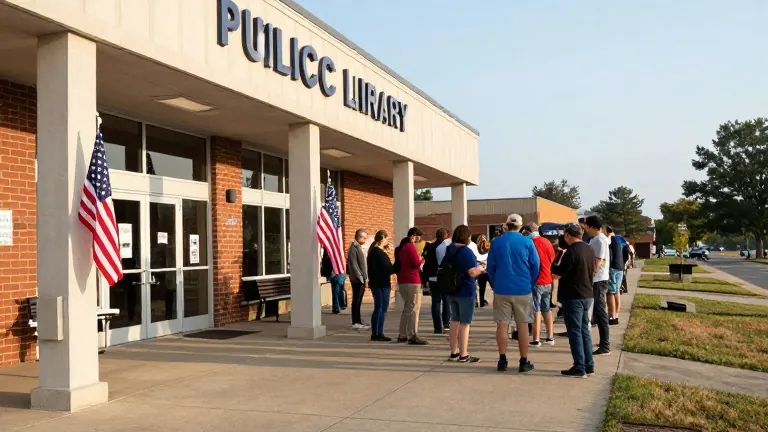
North Carolina registered Democrats cast ballots at a record pace for a mid-term election, with 38% of party members voting by the time early polls closed on Saturday afternoon. The figure represents the highest early turnout for the party in state history. In contrast, only 26% of registered Republicans submitted early ballots during the same period. The disparity has raised concerns among Republican leaders about the scale of turnout required on election day to secure victories in key districts.
Mark Harris, a Republican congressman representing a portion of the Charlotte area, described the voting patterns as unusual. He attributed the Democratic surge to voter anger and organizational efficiency. Harris stated that Democrats are motivated by what he called Trump Derangement Syndrome and are viewing the election as a final opportunity to oppose the former president. He also noted that the Democratic party appears more organized for voter mobilization than in recent years.
Harris, who holds a district considered safely Republican, is deploying additional funds for late-stage television advertisements as a precautionary measure. He faces Colby Watson, a Democrat and Union County farmer and business owner who is not a well-known political figure. The local race serves as a microcosm for the state-wide trends observed in the early voting data.
The low Republican turnout also poses challenges for Michael Whatley, the GOP candidate for the United States Senate in North Carolina. Current polling data indicates Whatley trails former Governor Roy Cooper by margins ranging from seven to thirteen points. Michael Bitzer, a professor at Catawba College and long-time election observer, said the polls have not tightened as they typically do in the final weeks of a campaign. He reported that Cooper maintains double-digit leads in various surveys.
In the neighboring state of South Carolina, the Senate race between Republican Darline Graham and Democrat Annie Andrews appears competitive. The latest polling data shows the two candidates effectively tied. Both states will hold elections on Tuesday, with polls opening at 6:30 am in North Carolina and 7:00 am in South Carolina.
Independent voters represent a major variable in the North Carolina contest. Approximately 35% of unaffiliated voters have already cast ballots, a number that observers describe as unusually high. Some analysts suggest that a significant portion of this group may vote for Democrats due to opposition to Trump, further complicating the math for Republican candidates.
Source: WBT