Caribbean Tour: King Charles faces reparations demands in Bahamas
The monarch arrives in New Providence as schools close and protesters demand acknowledgment of slavery's legacy.
By Marco Vargas ·
The Bahamas closed all public schools on New Providence on Tuesday to welcome King Charles III for the first official visit to the archipelago as monarch. The closure underscores the scale of the state welcome for the nine-day Caribbean tour, which has begun with immediate political pressure regarding the legacy of the transatlantic slave trade.
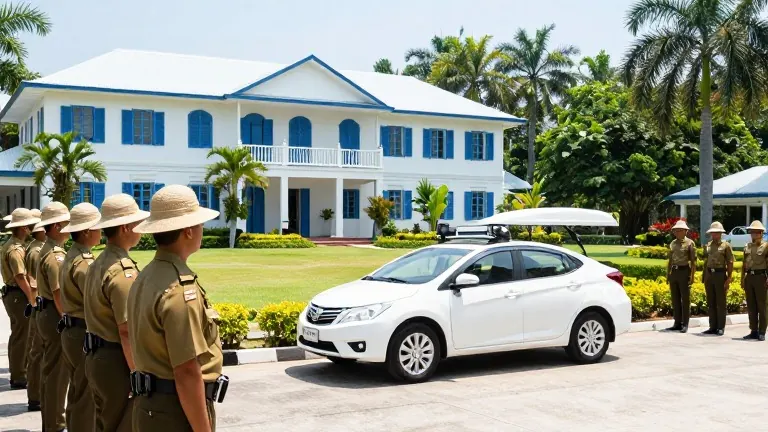
Charles, dressed in a light gray suit, greeted Governor-General Dame Cynthia A. Pratt and Prime Minister Philip Davis after a guard of honor from the police and armed forces formed a reception line. Members of the military wore pith helmets as they strode out to meet the king.
The monarch then traveled to Clifford Park, a site of historical importance where he previously granted independence to the Bahamas in 1973 while serving as Prince of Wales. The park serves as the central stage for the cultural events and official ceremonies planned for his three-day stay on the island.
Protesters from the Rastafarian community gathered near the park to voice opposition to the visit. One woman shouted, “Pay us what you owe us!” and stated, “I stand in memory of the horrors and the atrocities committed against Black people.” These demands align with a growing movement across the region for formal apologies and financial reparations.
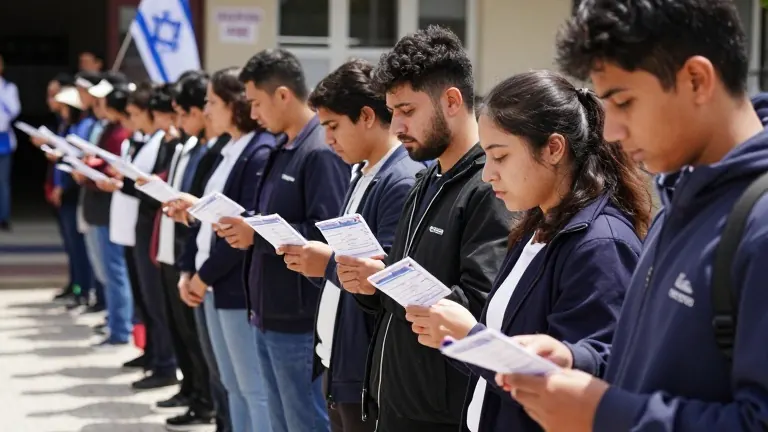
Inside the park, a different scene unfolded as a cheering crowd awaited the king. Dozens of young students waved small Bahamian flags before a cultural program that featured children singing and playing traditional music. The event was designed to showcase the resilience and artistic heritage of the island.
In his first public address, Charles acknowledged the complex history of the islands. “We know that some of what is best in Bahamian culture today, the most joyful, the most hopeful, the most bright, was born out of darkness,” he said. He added, “It is only right that we should acknowledge the great suffering and injustices of the past in these islands and beyond, even as we rejoice in the successes of the present.”
The visit comes amid escalating legal and diplomatic actions by Caribbean nations. Jamaica recently submitted its reparations case to Charles, and the matter is now under review by the United Kingdom’s highest court of appeal for the region. The British government has previously rejected demands for an official apology or direct financial compensation.
Environmental issues are also a focus of the itinerary. Eric Carey, former executive director of the Bahamas National Trust, said the Save Exuma Alliance is challenging a development project on Sampson Cay. Carey described the plan as “ill-advised” and “out of scale,” citing the need for a “massive” sea wall and the dredging of sea grass and coral reefs. The case is currently before the Bahamas Supreme Court.
Carey hopes the king’s presence will draw international attention to the vulnerability of the islands. “This is not a position of antidevelopment; our country is a tourism-based economy,” Carey said. He noted that Charles has a long history of defending the environment and visiting regions highly susceptible to climate impacts.
During his speech, Charles referenced the specific geographic risks facing the nation. “We cannot escape the fact that the journey ahead contains some treacherous shoals, in particular in an island nation where 90% of the land sits below two meters,” he said. He concluded, “There is perhaps nowhere better than the Bahamas to understand the reality of climate change.”
The schedule includes meetings with the Royal Bahamas Defense Force, government officials, and civil society leaders. A visit to a nature site is also planned. Charles is expected to leave for Guyana on Oct. 29 for a two-day stay, where the president has requested an apology. He will then travel to Antigua and Barbuda on Oct. 30 for the Commonwealth Heads of Government Meeting, joined by Queen Camilla. Climate, trade, and development are on the agenda, though some leaders argue reparations should be the primary focus.
Source: KSAT-TV