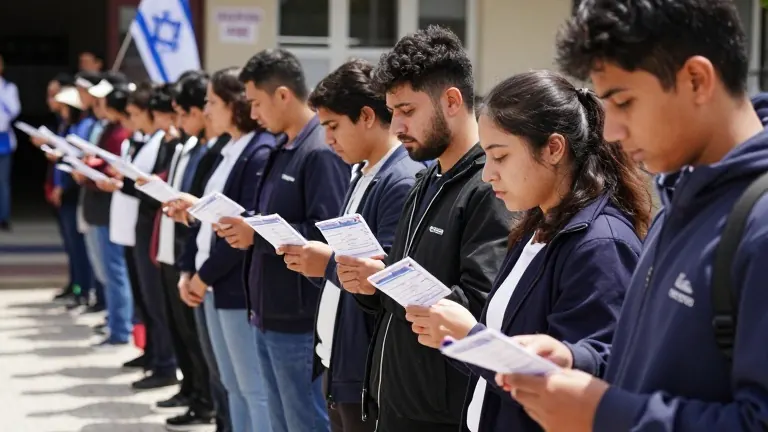
Israelis Cast Votes in First Knesset Election Since 2023 Hamas Attack
Gadi Eisenkot's Yashar party leads polls with 22 projected seats, but neither bloc can secure a governing majority without Arab party support.
By Stefan Greco ·
Twenty-two seats. That is the number Gadi Eisenkot's Yashar party is projected to win in Tuesday's Knesset election, placing it ahead of Prime Minister Benjamin Netanyahu's Likud party in the final Channel 12 poll released Friday.
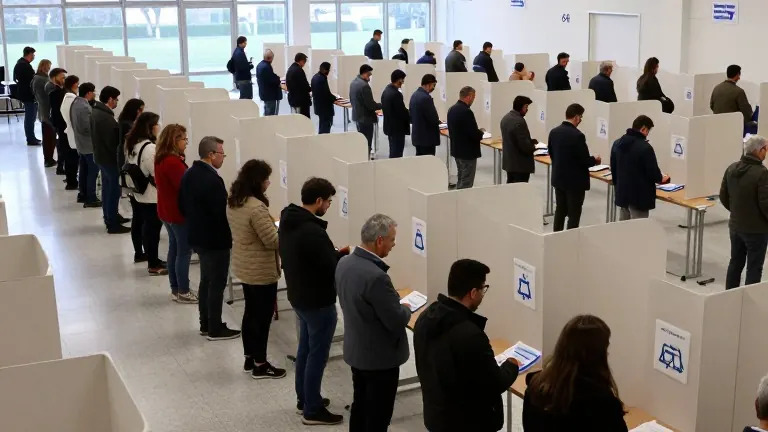
The election marks the first vote since the Hamas attack on October 7, 2023. Polling stations opened at 7:00 a.m., and exit polls are scheduled for 10:00 p.m. to provide preliminary projections. Official results will follow in the coming days after the count is completed.
Despite Yashar's lead, the opposition bloc projects 56 total seats, while Netanyahu's bloc projects 50. Neither side can reach the 61 seats required for a majority without the 16 seats expected for Arab parties. Most opposition leaders have stated they will not form a government with Arab parties, citing the security situation after October 7.
Voters are weighing the impact of three years of war on the IDF's manpower, the contentious haredi conscription law, and the demand for a state commission of inquiry into the government's failures on October 7. Traditional issues like Palestinian statehood have receded, with most parties now opposing it. Netanyahu, who has led Israel for 19 non-consecutive years, faces calls from the opposition to step down.
Likud is projected to win 19 seats, down from the 32 it currently holds. B'Yachad, led by former Prime Minister Naftali Bennett, is projected to win 14 seats. The outcome depends heavily on turnout, which affects the 3.25% electoral threshold. According to the Taub Center, a party needs 165,635 votes to enter the Knesset if turnout matches the 70% level of 2022.
Small parties, including Ofer Winter's People of Israel and Yoaz Hendel's the Reservists-Economics, are fighting to clear that threshold. Their success could determine whether either major bloc can form a stable coalition. Police have deployed approximately 20,000 officers and volunteers nationwide to maintain order, particularly after the release of exit polls.
Voting at diplomatic missions abroad ended on October 16, and some military bases voted last week. The Taub Center's calculations show the required vote count rises with higher turnout, making the threshold tougher for smaller parties. The election will determine whether Netanyahu remains in power or if the opposition can replace him in a fragmented parliament.
Source: The Jerusalem Post